What UNESCO says
UNESCO describes the property in these words: “In the district of Port Louis, lies the 1,640 m2 site where the modern indentured labour diaspora began. In 1834, the British Government selected the island of Mauritius to be the first site for what it called ‘the great experiment’ in the use of ‘free’ labour to replace slaves. Between 1834 and 1920, almost half a million indentured labourers arrived from India at Aapravasi Ghat to work in the sugar plantations of Mauritius, or to be transferred to Reunion Island, Australia, southern and eastern Africa or the Caribbean. The buildings of Aapravasi Ghat are among the earliest explicit manifestations of what was to become a global economic system and one of the greatest migrations in history.”[1]
Background
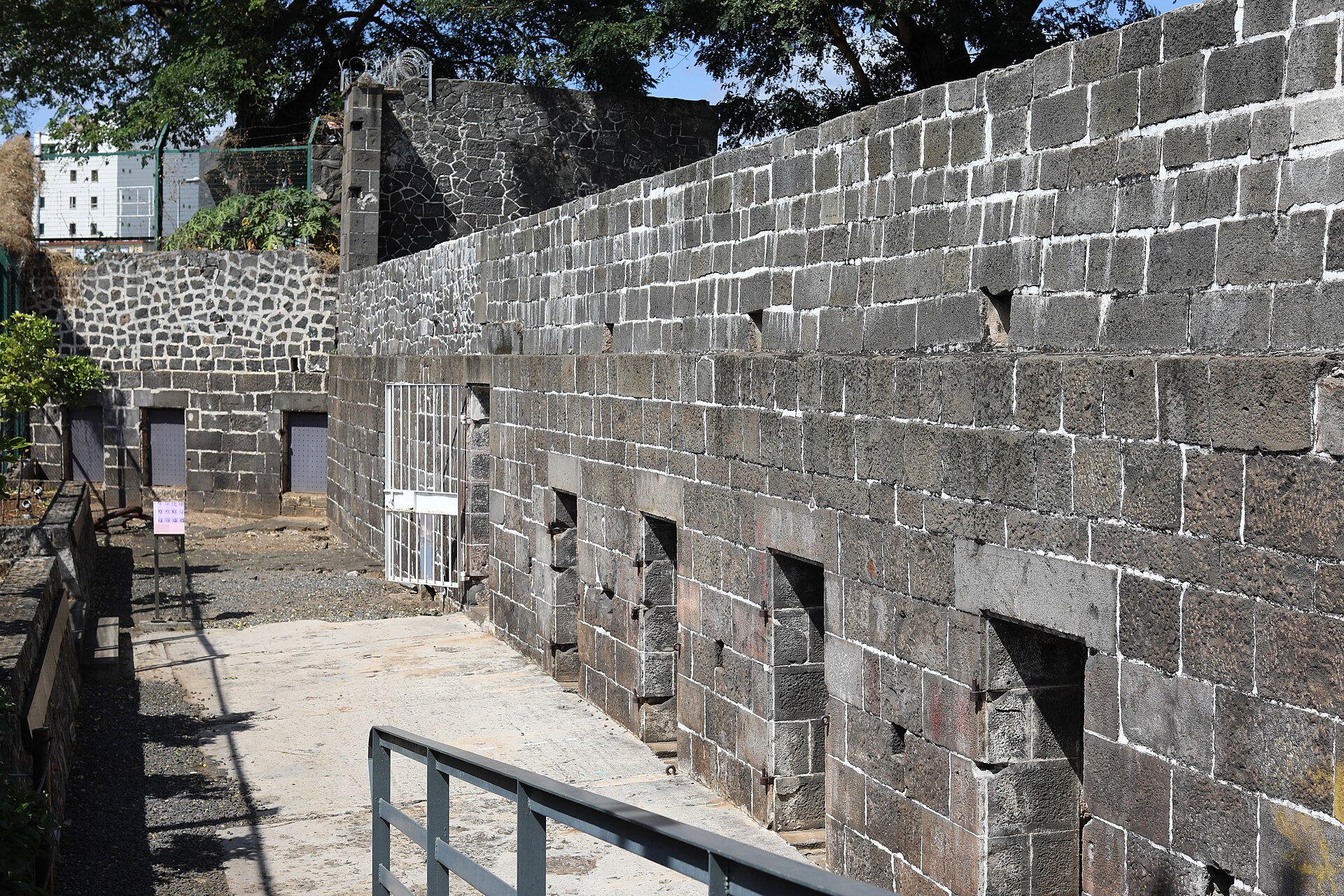
Aapravasi Ghat, 'the Immigration Depot', is a group of buildings in Port Louis, Mauritius, the first British colony to receive indentured labourers from many countries.[2] Wikipedia says that from 1849 to 1923 half a million Indian indentured labourers passed through it, on their way to plantations across the British Empire, and that 68 percent of Mauritius's people are of Indian ancestry.[2] It adds that unchecked development in the mid-20th century left only partial remains of three stone buildings, now protected as a national monument.[2]
The depot, as the site's managers describe it
The Aapravasi Ghat Trust Fund describes the site, in the bay of Trou Fanfaron in Port Louis, as a former immigration depot where indentured immigrants were received and registered between 1849 and 1910, tens of thousands of labourers from India, La Réunion and East Africa, mostly for the sugar estates.[3]
Immigrants stayed two to three days. Sixteen stone steps mark the arrival point, and a basalt building of 1849 housed the Office of the Protector of Immigrants. The hospital block is the only complete surviving stone structure, and after 1864 the railway was routed through the depot.[3]
In August 1910 the steamship Surada carried more than 200 Indian indentured workers, the last of the system. The site was restored between 2004 and 2010, an interpretation centre opened in 2014, and only about 25% of the original site survives.[3]
- Indian and Mauritian accounts of the Depot: the article read here gives the institutional history only.
- How the labour system compared with slavery, which the article does not discuss.
- Local voices: none yet.
- The depot's dates differ between sources: the Trust gives 1849 to 1910, while other accounts extend the period; the figures are not reconciled here. The descendants' own accounts are not included, and the Trust is the site's manager, not an independent observer.
Sources
- Institutional[1] Aapravasi Ghat. UNESCO World Heritage Centre, World Heritage List (open data, CC BY-SA 4.0). whc.unesco.org retrieved 7 Oct 2026
Read from UNESCO's open-data record (data.unesco.org, dataset whc001); the web page itself could not be opened from this project's tools. Texts are UNESCO's own. - Encyclopedia · to verify[2] Aapravasi Ghat. Wikipedia. en.wikipedia.org retrieved 7 Oct 2026
Used for background that the UNESCO record does not give. Each statement is limited to the article's lead and opening sections; confirm against specialist sources. - Institutional[3] Aapravasi Ghat. Aapravasi Ghat Trust Fund, on Google Arts & Culture. artsandculture.google.com retrieved 7 Oct 2026
The managing body's own account of the site. Its dates for the depot's use differ from some other sources.