What UNESCO says
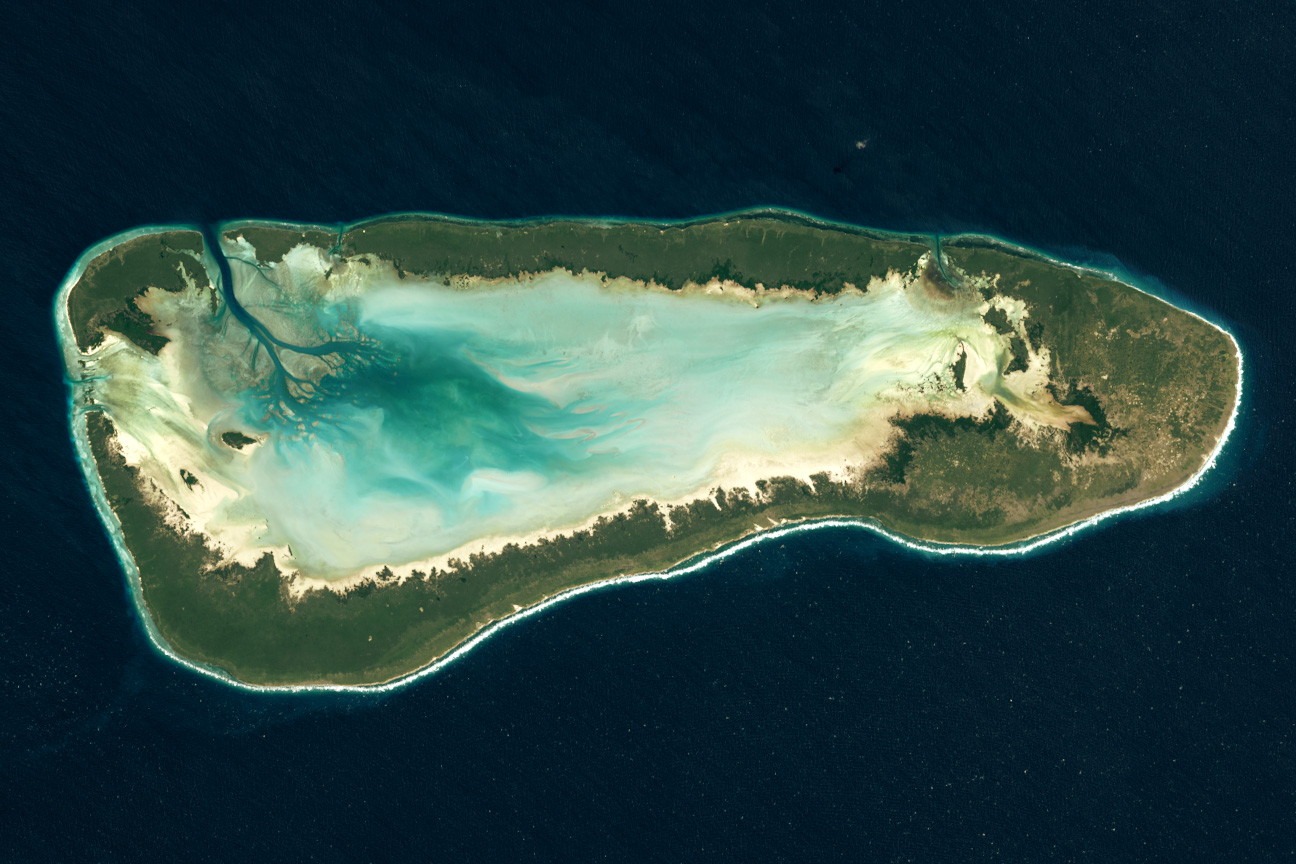
UNESCO describes the property in these words: “The atoll is comprised of four large coral islands which enclose a shallow lagoon; the group of islands is itself surrounded by a coral reef. Due to difficulties of access and the atoll's isolation, Aldabra has been protected from human influence and thus retains some 152,000 giant tortoises, the world's largest population of this reptile.”[1]
Background
Wikipedia calls Aldabra the world's second-largest coral atoll, after Kiritimati. It belongs to the Outer Islands of the Seychelles, 1,120 km south-west of the capital Victoria on Mahé.[2] The name comes from Arab seafarers, who named the atoll for its harsh, sun-baked environment, and Portuguese navigators visited in 1511.[2] In the middle of the 18th century it became a dependency of the French colony of Réunion, and expeditions came to capture the Aldabra giant tortoises. There is no surface fresh water, so explorers exploited tortoises, turtles and fish rather than settling.[2]
Tortoises, as described in 2019
National Geographic described Aldabra in 2019 as one of the world's largest coral atolls, more than 700 miles west of Mahé, with around 100,000 giant tortoises. Tortoises once lived on most islands of the Indian Ocean until 17th-century sailors hunted them for provisions, because they can survive months without water or food.[3]
Aldabra was the only island in the ocean basin where a few thousand survived. It was set aside as a special reserve in the 1980s and is a natural World Heritage site, managed by the Seychelles Island Foundation.[3]
The article calls the atoll extremely inhospitable: razor-sharp coral rock, no fresh water, many mosquitoes and heat. Other wildlife includes flightless Aldabra rails, coconut crabs the size of dinner plates, frigatebirds and sharks.[3]
- The tortoise population and the research station today. The part of the article read here stops before them.
- Conservation management and who decides access.
- Local voices: none yet.
- Population numbers are approximate and the article's own. The scientists' records and the foundation's work are not read here.
Sources
- Institutional[1] Aldabra Atoll. UNESCO World Heritage Centre, World Heritage List (open data, CC BY-SA 4.0). whc.unesco.org retrieved 7 Oct 2026
Read from UNESCO's open-data record (data.unesco.org, dataset whc001); the web page itself could not be opened from this project's tools. Texts are UNESCO's own. - Encyclopedia · to verify[2] Aldabra. Wikipedia. en.wikipedia.org retrieved 7 Oct 2026
Used for background that the UNESCO record does not give. Each statement is limited to the article's lead and opening sections; confirm against specialist sources. - Press[3] Thomas Peschak, Tortoises rule on Aldabra Atoll. National Geographic, 1 Jun 2019. www.nationalgeographic.com retrieved 7 Oct 2026
June 2019 issue; the exact day is not shown. A photographer's account.