What UNESCO says
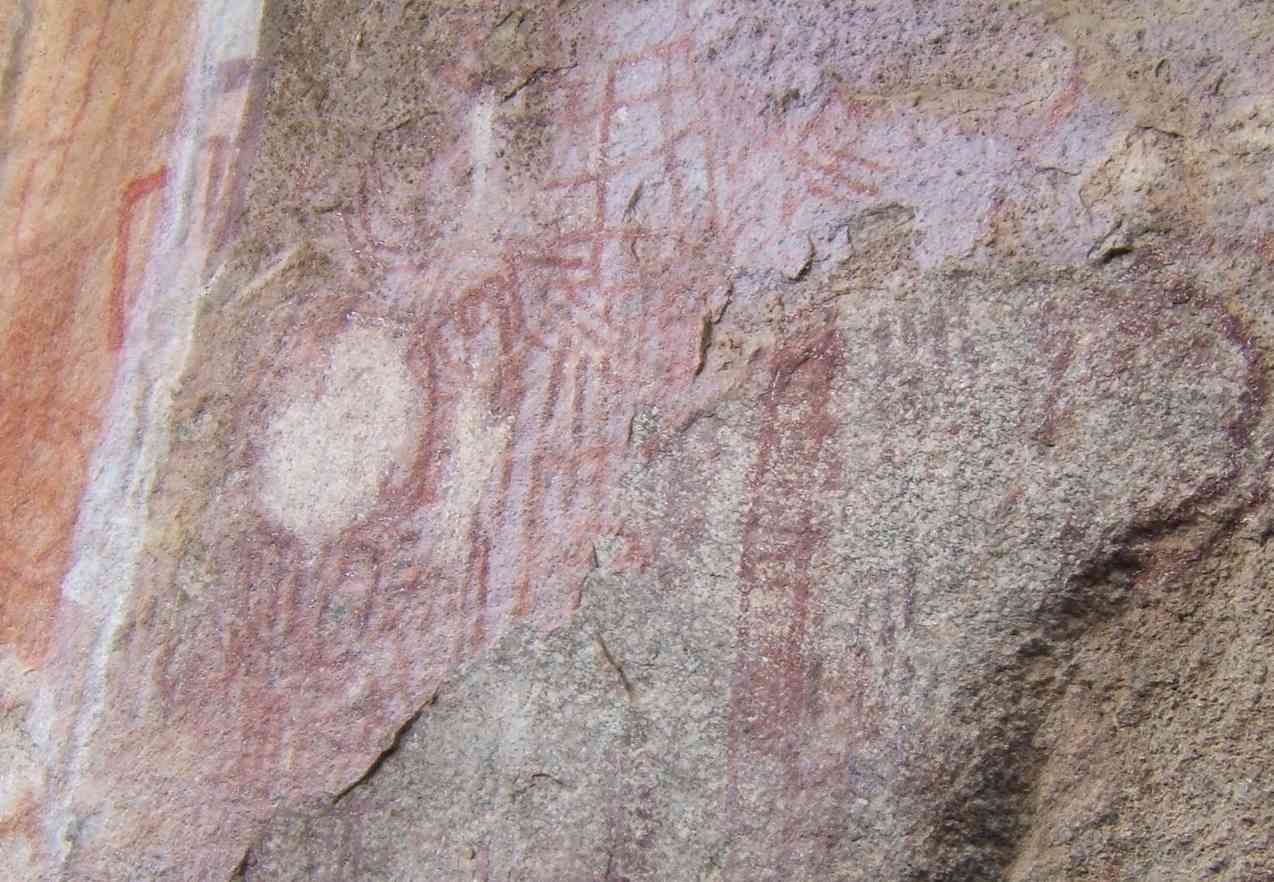
UNESCO describes the property in these words: “Situated within a cluster of forested granite hills and covering an area of 126.4 km2, high up the plateau of central Malawi, the 127 sites of this area feature the richest concentration of rock art in Central Africa. They reflect the comparatively scarce tradition of farmer rock art, as well as paintings by BaTwa hunter-gatherers who inhabited the area from the late Stone Age. The Chewa agriculturalists, whose ancestors lived there from the late Iron Age, practised rock painting until well into the 20th century. The symbols in the rock art, which are strongly associated with women, still have cultural relevance amongst the Chewa, and the sites are actively associated with ceremonies and rituals.”[1]
Background
The Chongoni area holds 127 rock art sites in the forested hills of the Malawi plateau, in the Central Region, according to Wikipedia.[2] It attributes the art to two groups: the BaTwa hunter-gatherers of the Stone Age and the Chewa farmers of the Iron Age, with the later paintings mostly made by Chewa women and linked to rituals and ceremonies.[2] The area is near Dedza, the highest town in Malawi, about 80 kilometres south-east of Lilongwe.[2]
The paintings, as the British Museum's archive describes them
The British Museum's archive says Malawi's rock art consists only of paintings attributed to two distinct groups, hunter-gatherers and farmers, with a chronology running from the Late Stone Age to the 1950s.[3]
Rock art is found throughout the country, but the main concentration is in the Chongoni area, in central Malawi near the Mozambique border, where around 150 sites have been located so far. The older paintings attributed to hunter-gatherers occur everywhere, while those made by farmers are concentrated in the Chongoni area and nearby parts of Mozambique and Zambia.[3]
- Chewa voices on the paintings and their continuing ritual use, which UNESCO's criterion vi points to but which the article only touches.
- Dating of the paintings, which the part of the article read here does not give.
- Local voices: none yet.
- The archive's country page is a general account; the Chewa people's own use and understanding of the paintings is not covered here.
Sources
- Institutional[1] Chongoni Rock-Art Area. UNESCO World Heritage Centre, World Heritage List (open data, CC BY-SA 4.0). whc.unesco.org retrieved 7 Oct 2026
Read from UNESCO's open-data record (data.unesco.org, dataset whc001); the web page itself could not be opened from this project's tools. Texts are UNESCO's own. - Encyclopedia · to verify[2] Chongoni Rock Art Area. Wikipedia. en.wikipedia.org retrieved 7 Oct 2026
Used for background that the UNESCO record does not give. Each statement is limited to the article's lead and opening sections; confirm against specialist sources. - Institutional[3] Malawi: country overview (Chongoni Hills). The British Museum, African Rock Art (with the Trust for African Rock Art). africanrockart.britishmuseum.org retrieved 7 Oct 2026
The site's security certificate did not verify from the tools used; the text was read with verification switched off.