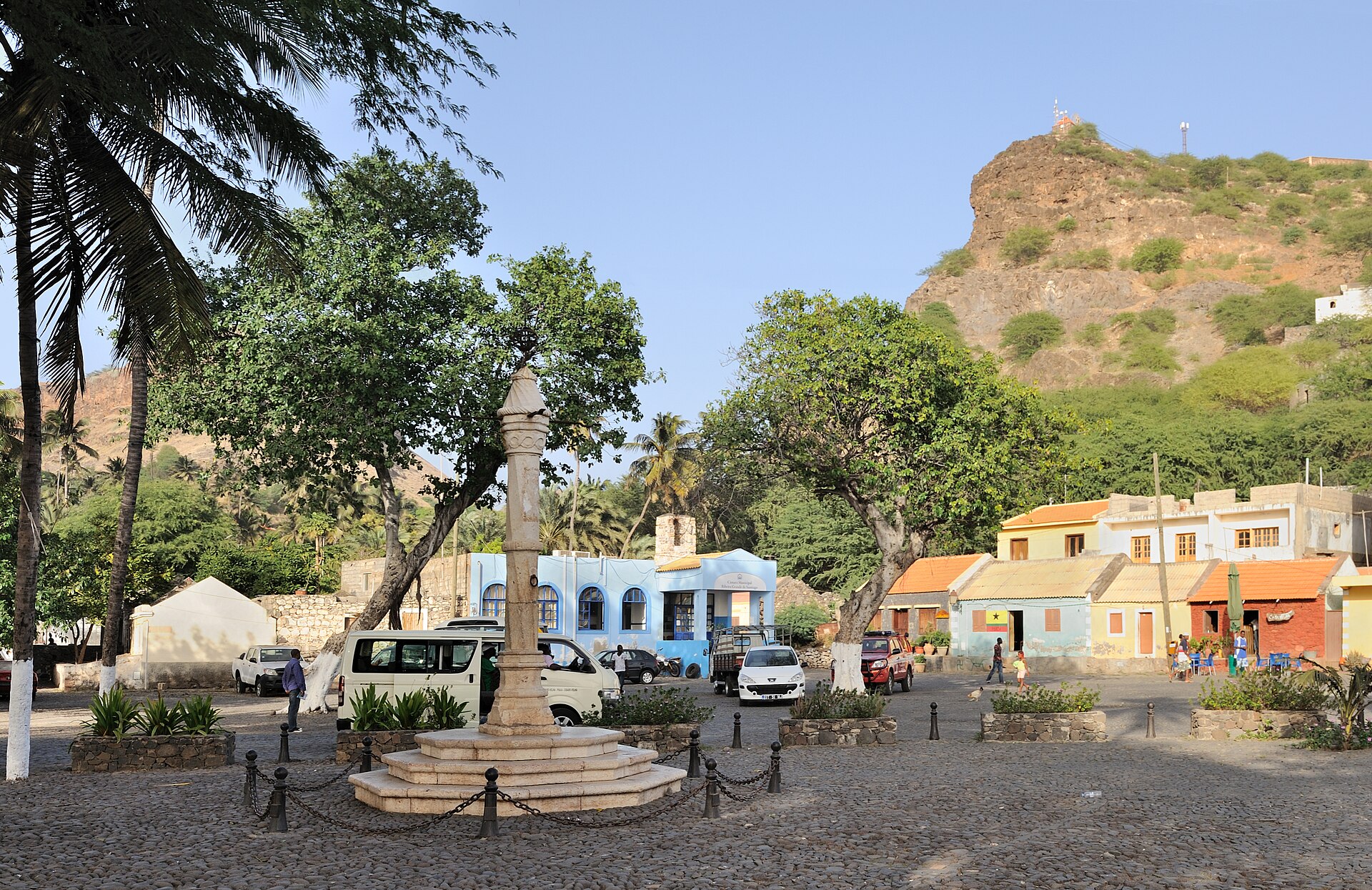
A cultural property on the UNESCO World Heritage List since 2009.
Historic site
The square with the historic pillory, Cidade Velha, Santiago island. Photo: Cayambe, CC BY-SA 3.0, via Wikimedia Commons.
Sourcing note. This card rests on UNESCO's own text and Wikipedia. No independent source has been added yet, so read it as an outline, not as a finished account. It was published without a prior review by people from the place. If something is wrong or missing, tell the project.
This card keeps two kinds of knowledge apart: what the documented record says, and what the people who know the place say. Each is labelled, so a reader always knows which one they are reading.
In the record cited to a source
From people who know this place one person's experience, shown as theirs
UNESCO describes the property in these words: “The town of Ribeira Grande, renamed Cidade Velha in the late 18th century, was the first European colonial outpost in the tropics. Located in the south of the island of Santiago, the town features some of the original street layout impressive remains including two churches, a royal fortress and Pillory Square with its ornate 16th century marble pillar.”[1]
Cidade Velha was founded in 1462 by Portuguese traders. Wikipedia calls it the oldest settlement in Cape Verde and its former capital, and the first European colonial settlement in the tropics.[2] The Portuguese called it Ribeira Grande and changed the name to Cidade Velha, 'old city', in the late 18th century, after the capital moved to Praia.[2] It lies on the south coast of Santiago, at the mouth of the Ribeira Grande de Santiago river and 10 kilometres west of Praia. Part of the planned original layout is still there, including a royal fortress, two churches and a 16th-century town square.[2]
Not yet sourced
What happened here in the slave trade: numbers, institutions and archaeology. The UNESCO text mentions its role, but no source on it has been read for this card.
The Creole culture of the town today, which Wikipedia only mentions.
Local voices: none yet.
Sources
Institutional[1] Cidade Velha, Historic Centre of Ribeira Grande. UNESCO World Heritage Centre, World Heritage List (open data, CC BY-SA 4.0). whc.unesco.orgretrieved 7 Oct 2026 Read from UNESCO's open-data record (data.unesco.org, dataset whc001); the web page itself could not be opened from this project's tools. Texts are UNESCO's own.
Encyclopedia · to verify[2] Cidade Velha. Wikipedia. en.wikipedia.orgretrieved 7 Oct 2026 Used for background that the UNESCO record does not give. Each statement is limited to the article's lead and opening sections; confirm against specialist sources.