A natural property on the UNESCO World Heritage List since 2023.
Historic site
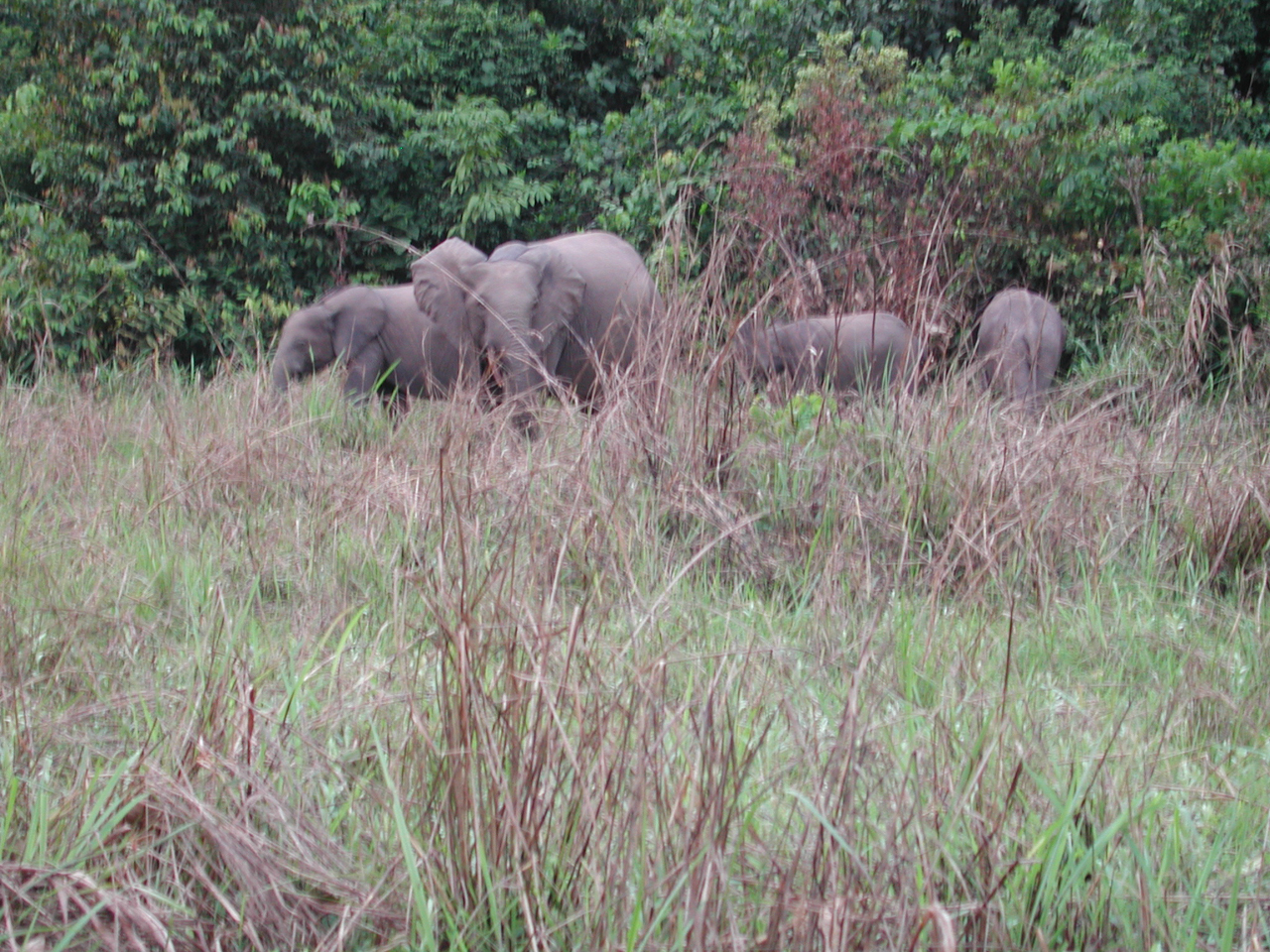
Forest elephants at Odzala-Kokoua National Park. Photo: (c) John P Friel, some rights reserved (CC BY), CC BY 4.0, via Wikimedia Commons.
Sourcing note. This card rests on UNESCO's own text and Wikipedia. No independent source has been added yet, so read it as an outline, not as a finished account. It was published without a prior review by people from the place. If something is wrong or missing, tell the project.
This card keeps two kinds of knowledge apart: what the documented record says, and what the people who know the place say. Each is labelled, so a reader always knows which one they are reading.
In the record cited to a source
From people who know this place one person's experience, shown as theirs
UNESCO describes the property in these words: “This property is an excellent example, at an exceptionally large-scale, of the process of post-glacial forest recolonization of savanna ecosystems. It is therefore ecologically significant as a convergence point of multiple ecosystem types (Congolese Forest, Lower Guinean Forest and Savanna). The broad range of age classifications across the forest succession spectrum contributes to the park’s highly distinct ecology, incorporating a broad range of remarkable ecological processes. It is one of the most important strongholds for forest elephants in Central Africa, and is recognized as the park with the richest primate diversity in the region.”[1]
Odzala-Kokoua is a national park and biosphere reserve in north-western Republic of the Congo, of about 13,500 square kilometres. Wikipedia says it was first protected in 1935, became a biosphere reserve in 1977 and was designated by presidential decree in 2001.[2] It has about 100 mammal species and one of the continent's most diverse primate populations, with old-growth rainforest, savanna, dry forest and many glades.[2] The non-profit African Parks has managed it with the Congolese government since 2010.[2]
Not yet sourced
The people who live around the park and their rights to the forest, which the article read here does not discuss.
Independent surveys behind the wildlife figures.
Local voices: none yet.
Sources
Institutional[1] Forest Massif of Odzala-Kokoua. UNESCO World Heritage Centre, World Heritage List (open data, CC BY-SA 4.0). whc.unesco.orgretrieved 7 Oct 2026 Read from UNESCO's open-data record (data.unesco.org, dataset whc001); the web page itself could not be opened from this project's tools. Texts are UNESCO's own.
Encyclopedia · to verify[2] Odzala-Kokoua National Park. Wikipedia. en.wikipedia.orgretrieved 7 Oct 2026 Used for background that the UNESCO record does not give. Each statement is limited to the article's lead and opening sections; confirm against specialist sources.