Sources beyond UNESCO and Wikipedia: 1 (1 press). Check each source's status in the list at the end of the card. It was published without a prior review by people from the place. If something is wrong or missing, tell the project.
This card keeps two kinds of knowledge apart: what the documented record says, and what the people who know the place say. Each is labelled, so a reader always knows which one they are reading.
In the record cited to a source
From people who know this place one person's experience, shown as theirs
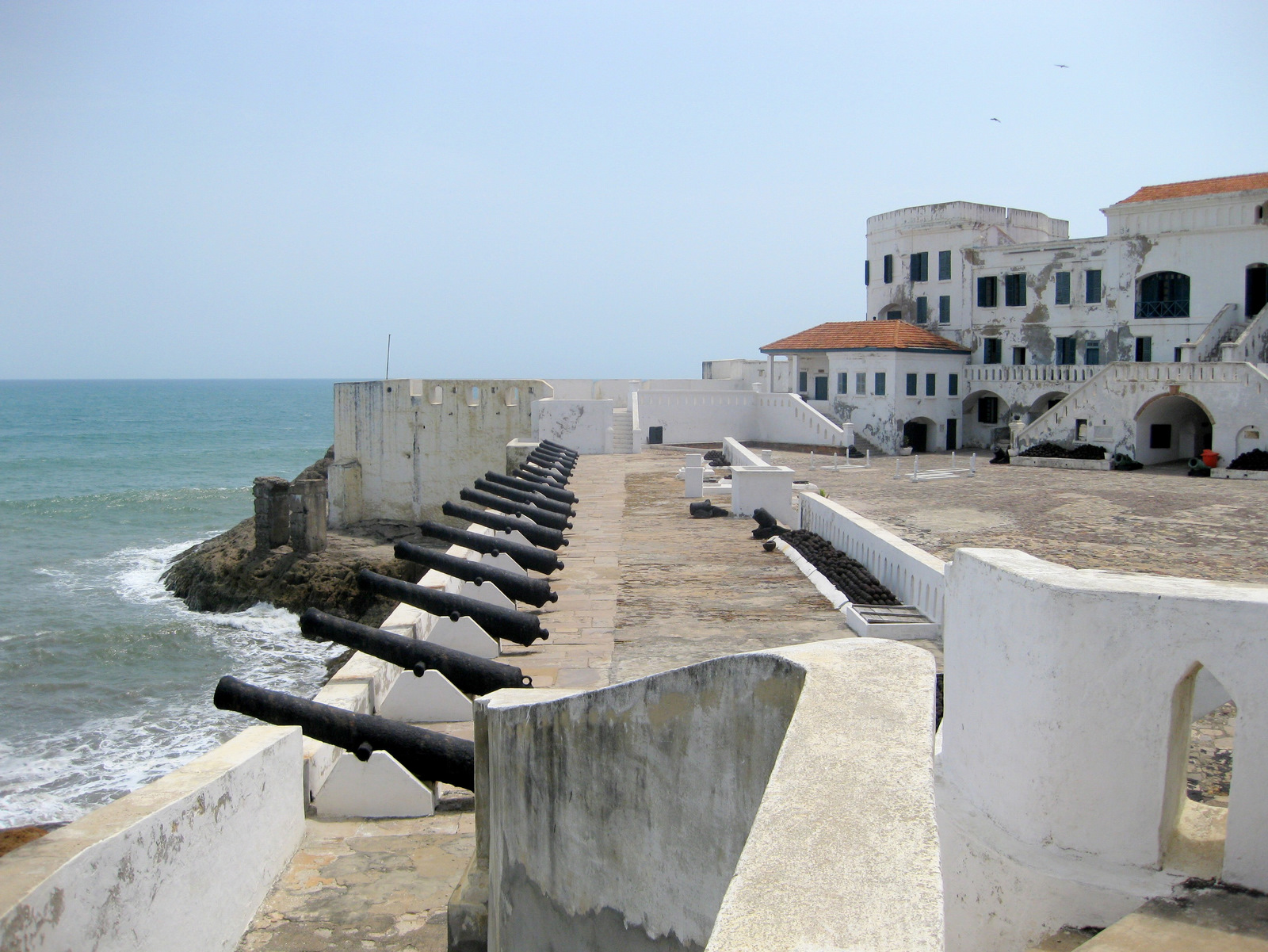
UNESCO describes the property in these words: “The remains of fortified trading-posts, erected between 1482 and 1786, can still be seen along the coast of Ghana between Keta and Beyin. They were links in the trade routes established by the Portuguese in many areas of the world during their era of great maritime exploration.”[1]
The property is a group of forts and castles along the coast. Cape Coast Castle is one of them, and a 2022 newspaper feature gives its building history.[2] It says the Portuguese had a trade lodge there in 1555, and that the Swedes began the permanent structure in 1653.[2] Dutch occupation began in 1660. A British fleet under Captain Holmes took the fort in 1665, and by 1700 the British had upgraded it into a castle.[2] After a French naval bombardment left it badly damaged, the English rebuilt it entirely after 1760. The feature adds that in the 18th century it became the centre of European education in Ghana.[2] The feature mentions the castle's part in the trans-Atlantic slave trade but does not describe it.[2]
Not yet sourced
The other forts in the property, which this card does not describe (Elmina is the best known).
The slave trade at the castle: numbers, conditions, and how the site tells that history today. The only source read here does not cover it.
A scholarly history to check the dates of changes of control, which differ between sources.
Local voices: none yet.
Sources
Institutional[1] Forts and Castles, Volta, Greater Accra, Central and Western Regions. UNESCO World Heritage Centre, World Heritage List (open data, CC BY-SA 4.0). whc.unesco.orgretrieved 7 Oct 2026 Read from UNESCO's open-data record (data.unesco.org, dataset whc001); the web page itself could not be opened from this project's tools. Texts are UNESCO's own.
Press · to verify[2] Cape Coast Castle. Graphic Online, by Douglas Anane-Frimpong (6 February 2022). www.graphic.com.ghretrieved 7 Oct 2026 A newspaper feature on the castle's building history. It does not cover the slave trade in detail. Dates of changes of control differ between sources; check against a scholarly history.