What UNESCO says
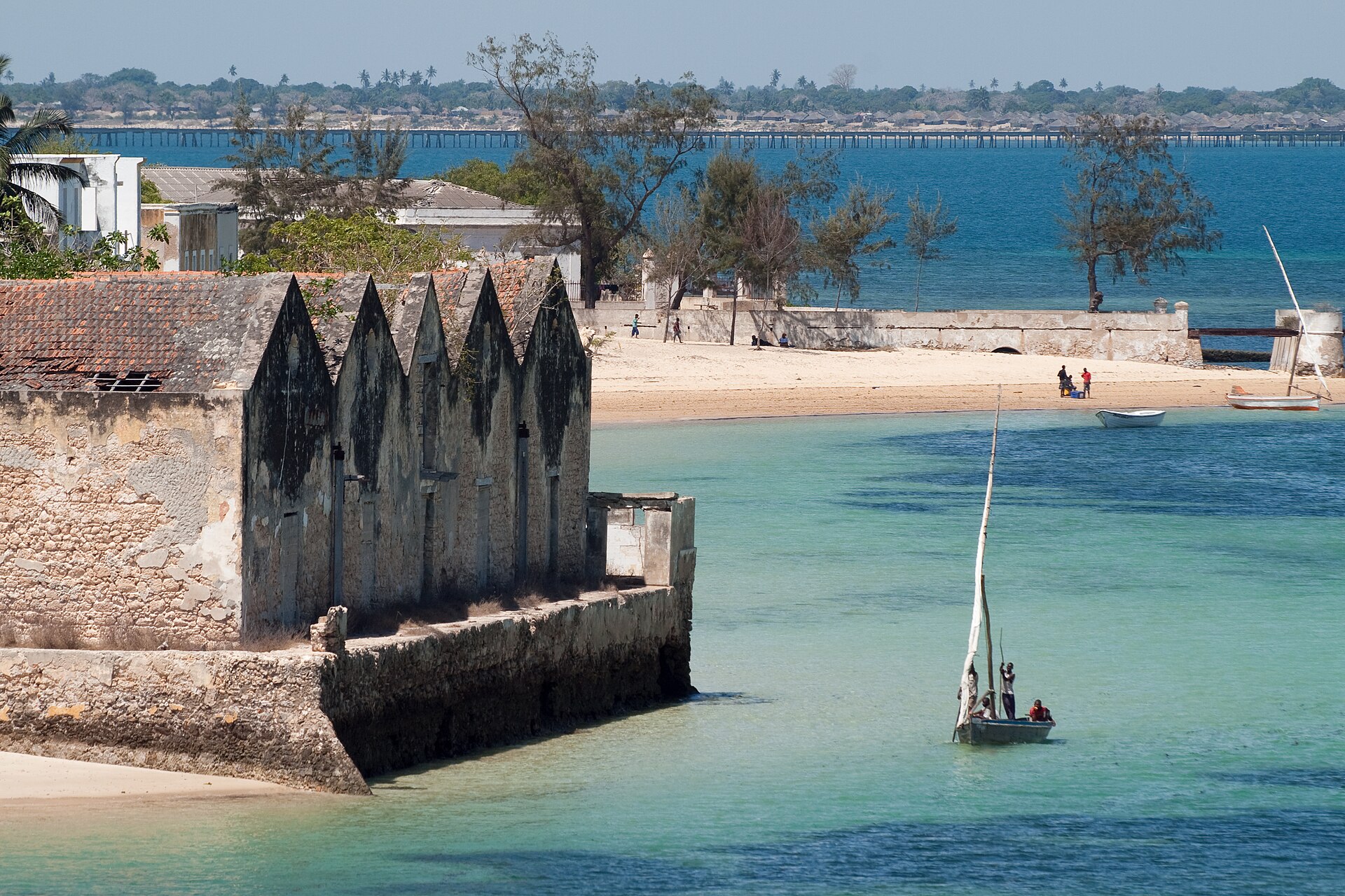
UNESCO describes the property in these words: “The fortified city of Mozambique is located on this island, a former Portuguese trading-post on the route to India. Its remarkable architectural unity is due to the consistent use, since the 16th century, of the same building techniques, building materials (stone or macuti) and decorative principles.”[1]
Background
The Island of Mozambique lies off northern Mozambique, in Nampula Province, and until 1898 was the capital of colonial Portuguese East Africa. The country takes its name from the island.[2] Wikipedia gives a permanent population of about 14,000 and says pottery shows the town was founded no later than the 14th century. According to tradition the first Swahili population came from Kilwa.[2] In 1514 Duarte Barbosa noted a Muslim population speaking the same Swahili dialect as Angoche. The name comes, the article says, from Ali Musa Mbiki, sultan of the island in the time of Vasco da Gama.[2]
The island today, as described in 2017
National Geographic wrote in 2017 that Arab merchants used the island as a harbour and trading centre from the 10th to the 15th century, before Vasco da Gama claimed it for Portugal in 1498. For nearly 400 years it was the colonial capital of Portuguese East Africa, on the maritime routes for gold, spices and slaves.[3]
The capital moved to Lourenço Marques in 1907 and the population dwindled. The island was inscribed in 1991. Stone Town was the seat of government, while the palm-leaf roofs of Macuti Town are emblematic of traditional African architecture, and the Fort of São Sebastião is described as the oldest standing fort in sub-Saharan Africa.[3]
Residents rely on fishing, and the article says foreign fishing vessels in Mozambican waters are destroying fish populations on reefs.[3]
- The Portuguese period and the slave trade through the island, which the part of the article read here does not reach.
- What residents say about heritage, housing and tourism.
- Local voices: none yet.
- A travel feature from 2017 written by an outside visitor: residents' and historians' accounts of the island's history, including the slave trade, are not covered here.
Sources
- Institutional[1] Island of Mozambique. UNESCO World Heritage Centre, World Heritage List (open data, CC BY-SA 4.0). whc.unesco.org retrieved 7 Oct 2026
Read from UNESCO's open-data record (data.unesco.org, dataset whc001); the web page itself could not be opened from this project's tools. Texts are UNESCO's own. - Encyclopedia · to verify[2] Island of Mozambique. Wikipedia. en.wikipedia.org retrieved 7 Oct 2026
Used for background that the UNESCO record does not give. Each statement is limited to the article's lead and opening sections; confirm against specialist sources. - Press[3] Gulnaz Khan, Island of Mozambique UNESCO World Heritage Site. National Geographic, 14 Nov 2017. www.nationalgeographic.com retrieved 7 Oct 2026
A travel feature; photographs by Luca Locatelli.