Background
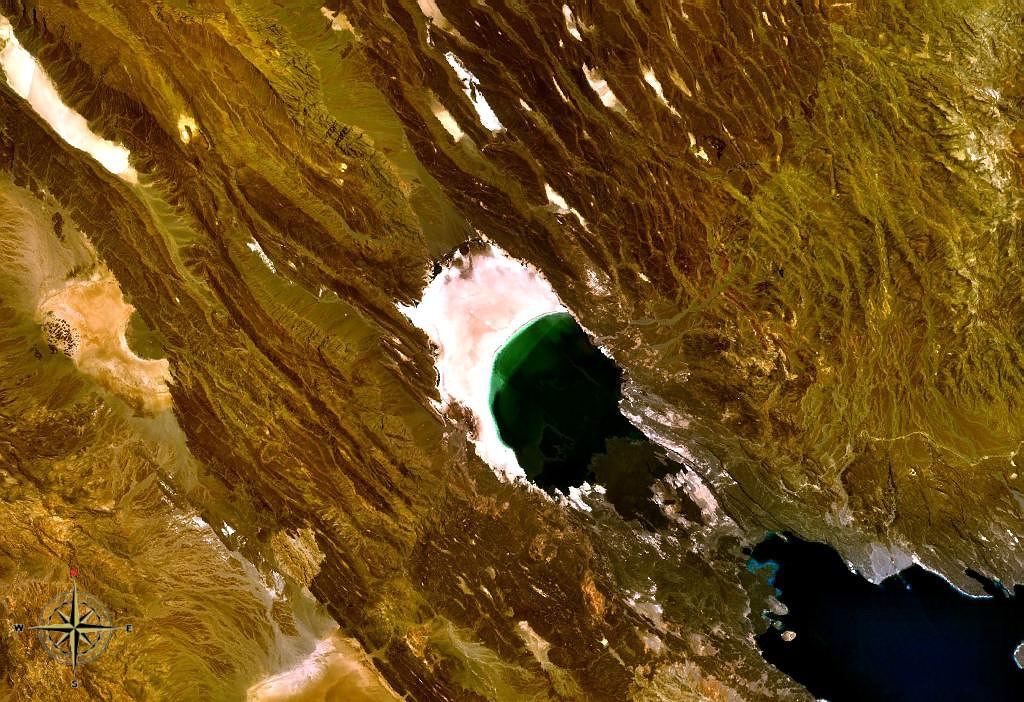
Lake Assal is a crater lake in central-western Djibouti, about 120 km west of Djibouti city, at the top of the Great Rift Valley. Wikipedia says it lies 155 metres below sea level in the Afar Triangle, the lowest point on land in Africa and the third-lowest on Earth.[1] It has no outflow and, because of high evaporation, its salinity is ten times that of the sea. The salt is exploited under four concessions awarded in 2002, and nearly 80 percent of production is held by two companies.[1] The lake is a protected zone under Djibouti's National Environmental Action Plan of 2000, though the article says the law does not define its boundaries.[1]
The Afar and its salt, as described in 2012
National Geographic wrote in 2012 that the Afar depression has been repeatedly flooded by the Red Sea, most recently about 30,000 years ago, and that each time the seawater evaporated and left thick layers of salt. Some parts of the Afar now sit more than 500 feet below sea level.[2]
Salt blocks called amole were used as money throughout Ethiopia, and the "white gold" has long been an important source of income for the Afar people. The article calls the depression one of the world's most geologically hyperactive regions.[2]
- The salt workers and the caravans of the Afar who carried salt: the right voices here, absent from the article read here.
- The environmental effect of the salt concessions, which the article's lead only begins to raise.
- This place was chosen by the project as one of Djibouti's best known; Djibouti has no site on the World Heritage List.
- Local voices: none yet.
- That article is mostly about the Afar salt mines in Ethiopia and mentions Lake Assal only briefly, so nothing here describes Assal's own mining, caravans or workers.
Sources
- Encyclopedia · to verify[1] Lake Assal (Djibouti). Wikipedia. en.wikipedia.org retrieved 7 Oct 2026
Used for background that the UNESCO record does not give. Each statement is limited to the article's lead and opening sections; confirm against specialist sources. - Press[2] Virginia Morell, The Salt and the Earth. National Geographic. www.nationalgeographic.com retrieved 7 Oct 2026
January 2012 issue. It is mostly about the Afar salt mines in Ethiopia and mentions Lake Assal only briefly.