What UNESCO says
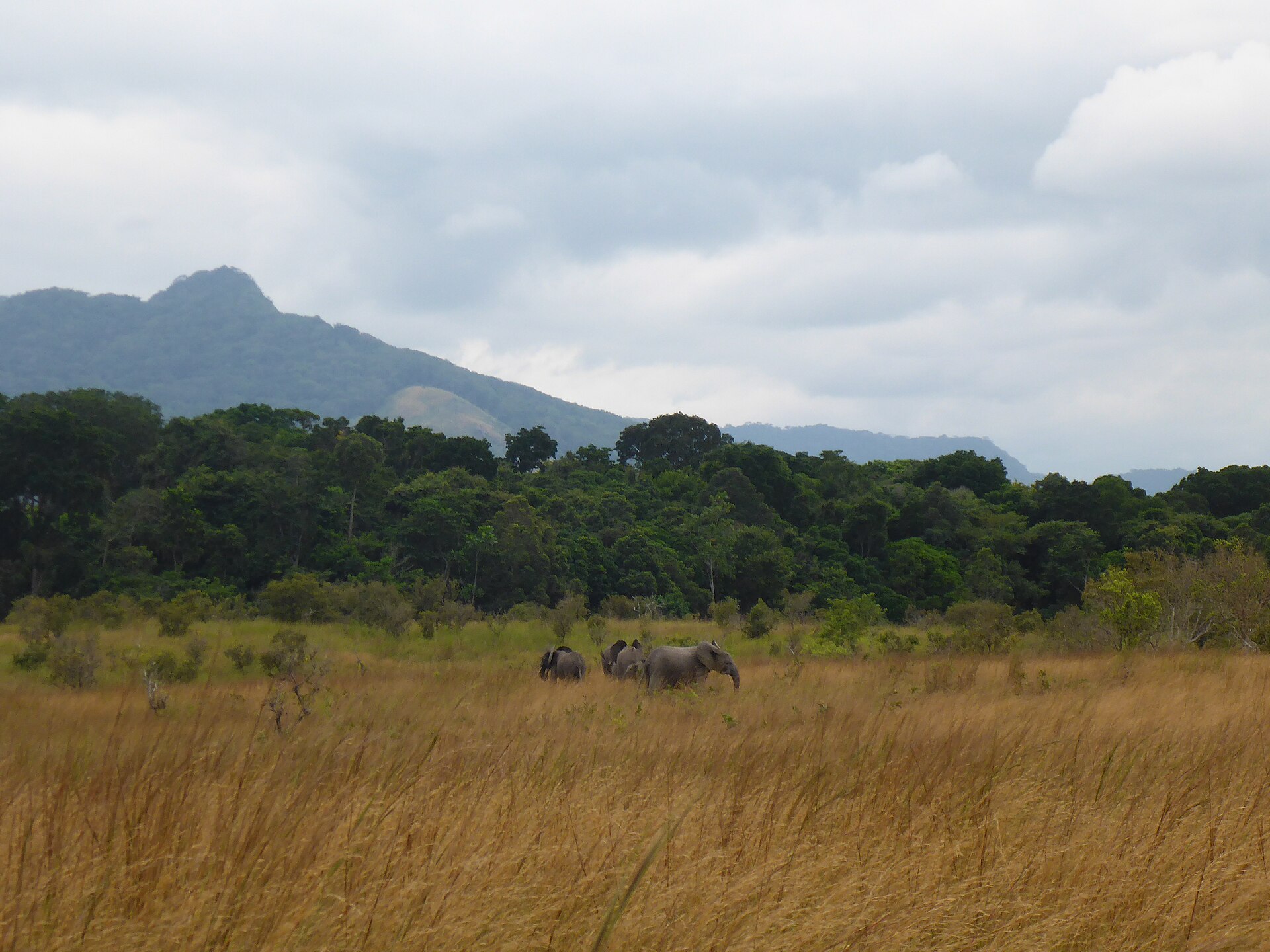
UNESCO describes the property in these words: “The Ecosystem and Relict Cultural Landscape of Lopé-Okanda demonstrates an unusual interface between dense and well-conserved tropical rainforest and relict savannah environments with a great diversity of species, including endangered large mammals, and habitats. The site illustrates ecological and biological processes in terms of species and habitat adaptation to post-glacial climatic changes. It contains evidence of the successive passages of different peoples who have left extensive and comparatively well-preserved remains of habitation around hilltops, caves and shelters, evidence of iron-working and a remarkable collection of some 1,800 petroglyphs (rock carvings). The property’s collection of Neolithic and Iron Age sites, together with the rock art found there, reflects a major migration route of Bantu and other peoples from West Africa along the River Ogooué valley to the north of the dense evergreen Congo forests and to central east and southern Africa, that has shaped the development of the whole of sub-Saharan Africa.”[1]
Background
Lopé National Park is in central Gabon. Wikipedia says it is bordered by the Ogooué River to the north and the Chaillu Massif to the south, and has an area of 4,912 km².[2]
How the area came to be protected, from a 2007–08 data sheet
A data sheet from UNEP-WCMC places the area in central Gabon, 290 km east of Libreville and 20 km west of Booué on the Ogooué, at altitudes of 75 to 960 metres. The national park covers 491,291 hectares, with a notional buffer zone of 170,700 hectares that includes seven archaeological complexes.[3]
It traces its protection from a hunting reserve in 1946, through a Lopé Faunal Reserve in 1982, a strict nature reserve in 1996 and the national park in 2002. Seven archaeological cultural areas were gazetted in 2005 and a national parks agency was created in 2007.[3]
The sheet records over 1,550 plant species, 40 of them new to Gabon, and says there were then no active conservation measures at the archaeological sites, which would need consolidation and trained staff. It names commercial poaching and logging bans as priorities.[3]
- Nearly everything beyond location and size. The UNESCO title refers to an ecosystem and a relict cultural landscape; the cultural side (archaeology, the Okanda people) has not been described.
- Local voices: none yet.
- That data sheet is from around 2007–08: the park's present management, its wildlife numbers and the state of the archaeological sites are not covered, and neither are local voices.
Sources
- Institutional[1] Ecosystem and Relict Cultural Landscape of Lopé-Okanda. UNESCO World Heritage Centre, World Heritage List (open data, CC BY-SA 4.0). whc.unesco.org retrieved 7 Oct 2026
Read from UNESCO's open-data record (data.unesco.org, dataset whc001); the web page itself could not be opened from this project's tools. Texts are UNESCO's own. - Encyclopedia · to verify[2] Lopé National Park. Wikipedia. en.wikipedia.org retrieved 7 Oct 2026
Used for background that the UNESCO record does not give. Each statement is limited to the article's lead and opening sections; confirm against specialist sources. - Institutional[3] Ecosystem & Relict Cultural Landscape of Lopé-Okanda, Gabon (World Heritage data sheet). UNEP World Conservation Monitoring Centre (copy hosted on thesalmons.org). www.thesalmons.org retrieved 7 Oct 2026
Undated; it refers to the 2007 inscription and a 2006–2011 management plan, so it was written around 2007–2008. Its statement of value repeats UNESCO's; the establishment history and the management notes are the data sheet's own. The copy is hosted by a third party.