What UNESCO says
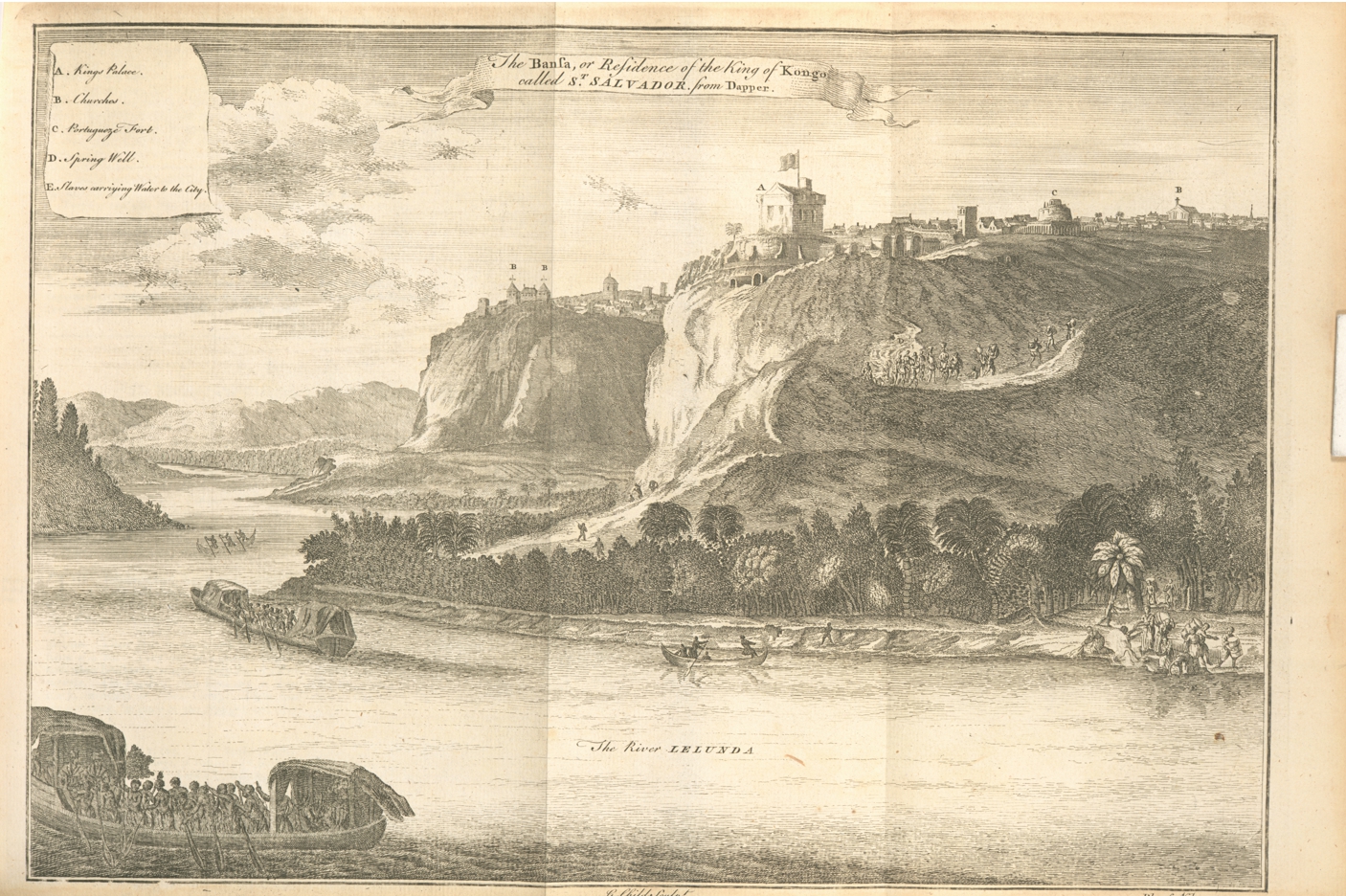
UNESCO describes the property in these words: “The town of Mbanza Kongo, located on a plateau at an altitude of 570 m, was the political and spiritual capital of the Kingdom of Kongo, one of the largest constituted states in Southern Africa from the 14th to 19th centuries. The historical area grew around the royal residence, the customary court and the holy tree, as well as the royal funeral places. When the Portuguese arrived in the 15th century they added stone buildings constructed in accordance with European methods to the existing urban conurbation built in local materials. Mbanza Kongo illustrates, more than anywhere in sub-Saharan Africa, the profound changes caused by the introduction of Christianity and the arrival of the Portuguese into Central Africa.”[1]
Background
Mbanza Kongo is the capital of Zaire Province in north-western Angola, with 221,141 people in 2024. Wikipedia says it was the capital of the Kingdom of Kongo from its foundation, before the Portuguese arrived in 1483, until the kingdom was abolished in 1915, apart from a short abandonment during civil wars in the 17th century.[2] The article says it was founded by the first manikongo, Lukeni, at a junction of major trade routes. The Portuguese first reached it in 1491, after ten days' travel from the mouth of the Congo River.[2] It was declared a World Heritage Site in 2017.[2]
The city today, as described in 2024
Macao Magazine wrote in 2024 that the Kingdom of Kongo, founded in the late 14th century, reached from what is now Gabon through the two Congos into northern Angola. Diogo Cão arrived in 1482; King Nzinga a Nkuwu converted and was baptised João I, and his successor Afonso made Christianity the official religion.[3]
Mbanza Kongo was centred on a royal residence and cemetery, a customary court and a sacred tree, and Portuguese-style buildings and churches were added. The Cathedral of the Holy Saviour of Congo, with adobe and stone walls, fuses African and European styles, and excavations have revealed the royal residence's foundations. The Nkulumbimbi Shrine is a large rock engraved with symbols.[3]
In January 2024 the president approved an agreement of around US$120 million for restoration and conservation, and a new airport 34 kilometres away was expected in 2025.[3]
- Kongo voices and Angolan historians on the kingdom, beyond the outline in the article.
- The Portuguese period, Christianity at the Kongo court and the slave trade, which the part of the article read here does not reach.
- Local voices: none yet.
- That feature is a magazine piece addressed to travellers and investors: the Kongo people's own account of the city, and independent checks on the restoration figures, are not included.
Sources
- Institutional[1] Mbanza Kongo, Vestiges of the Capital of the former Kingdom of Kongo. UNESCO World Heritage Centre, World Heritage List (open data, CC BY-SA 4.0). whc.unesco.org retrieved 7 Oct 2026
Read from UNESCO's open-data record (data.unesco.org, dataset whc001); the web page itself could not be opened from this project's tools. Texts are UNESCO's own. - Encyclopedia · to verify[2] M'banza-Kongo. Wikipedia. en.wikipedia.org retrieved 7 Oct 2026
Used for background that the UNESCO record does not give. Each statement is limited to the article's lead and opening sections; confirm against specialist sources. - Press[3] Fei Pou Lo, The vestiges of a fallen kingdom: Mbanza Kongo is making its comeback. Macao Magazine. macaomagazine.net retrieved 7 Oct 2026
April 2024. A magazine feature for a Portuguese-language audience of travellers and investors.