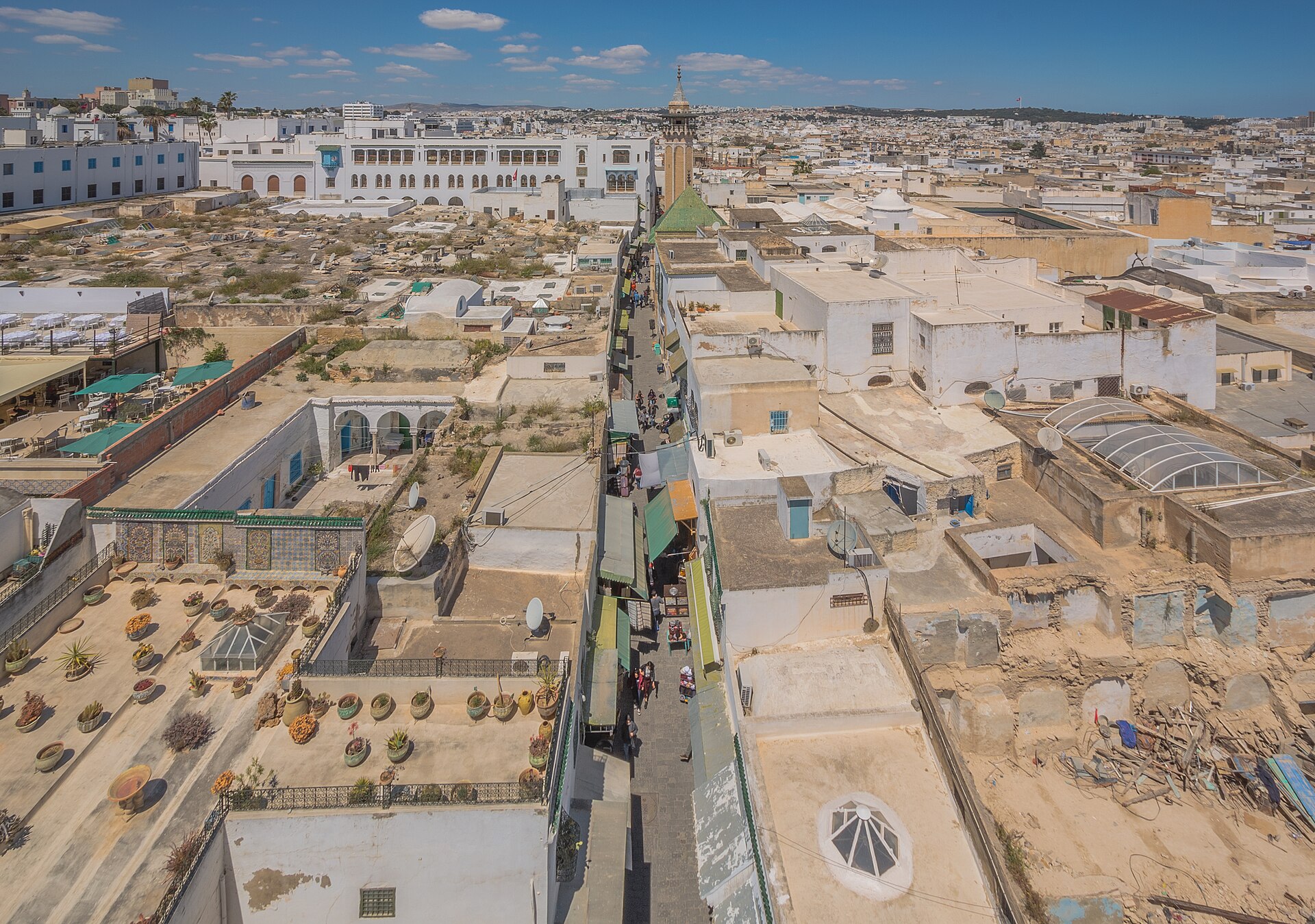
What UNESCO says
UNESCO describes the property in these words: “Under the Almohads and the Hafsids, from the 12th to the 16th century, Tunis was considered one of the greatest and wealthiest cities in the Islamic world. Some 700 monuments, including palaces, mosques, mausoleums, madrasas and fountains, testify to this remarkable past.”[1]
Background
The Medina of Tunis has been a World Heritage Site since 1979 and contains some 700 monuments, including palaces, mosques, mausoleums, madrasas and fountains, according to Wikipedia.[2] The article says it was founded in 698 around the original core of the Zitouna Mosque and took its essential form in the Hafsid period, when Tunis became a religious, intellectual and economic centre.[2]
A living medina, as reported in 2022
Africanews reported in July 2022 that the medina was founded in the ninth century and began to expand in the 13th, when Tunis became the capital of the Hafsid kingdom. It has about two dozen small souks devoted to artisans such as tanners, perfume sellers and shoemakers, and was listed in 1979.[3]
About 25,000 people live in the medina. New initiatives bring in art festivals, guesthouses and a project offering treasure hunts, cooking classes and calligraphy. The report adds that some museums and monuments remain closed, including the Sidi Bou Khrissane and Dar Ben Abdallah museums, closed for 15 years, and that the Zitouna mosque is closed to non-Muslims.[3]
- Residents' and craftspeople's accounts of the medina today.
- The Ottoman and French periods, which the part of the article read here does not reach.
- Local voices: none yet.
- Residents' accounts of the changes, and of the houses and crafts, are not here. The July 2022 figures are the report's.
Sources
- Institutional[1] Medina of Tunis. UNESCO World Heritage Centre, World Heritage List (open data, CC BY-SA 4.0). whc.unesco.org retrieved 7 Oct 2026
Read from UNESCO's open-data record (data.unesco.org, dataset whc001); the web page itself could not be opened from this project's tools. Texts are UNESCO's own. - Encyclopedia · to verify[2] Medina of Tunis. Wikipedia. en.wikipedia.org retrieved 7 Oct 2026
Used for background that the UNESCO record does not give. Each statement is limited to the article's lead and opening sections; confirm against specialist sources. - Press[3] Tunisia: Festivals, guesthouses breathe life back into old Tunis. Africanews, 11 Jul 2022. www.africanews.com retrieved 7 Oct 2026
A news feature from July 2022.