What UNESCO says
UNESCO describes the property in these words: “The serial property is composed of six historic towns which developed from urban nuclei that emerged around at least the 11th century and evolved into city-states around the 14th-15th century. They eventually became the principal urban centres of the sultanates established on the islands of the archipelago of Comoros. With a common hierarchical system of social organisation, based on matrilineal and matrilocal customs, age-group systems, and patrilineal Islamic traditions still alive today, the property showcases insular urban forms and architectural expressions that resulted from cultural exchanges related to migration and Indian Ocean trade networks, embedded in the local social, geographical, and environmental context.”[1]
Background
Wikipedia's list of World Heritage Sites in Comoros says the country accepted the convention on 27 September 2000, and that the Medinas of the Historic Sultanates of the Comoros, its only World Heritage Site, were listed in 2026, with three more sites on the tentative list.[2]
The six medinas, as reported at the 2026 listing
AFP reported on 25 July 2026, from Busan, that six medinas, four on Grande Comore and two on Anjouan, were added to the World Heritage List. They were once home to historic sultanates on the Indian Ocean trade routes linking East Africa, the Middle East and Madagascar.[3]
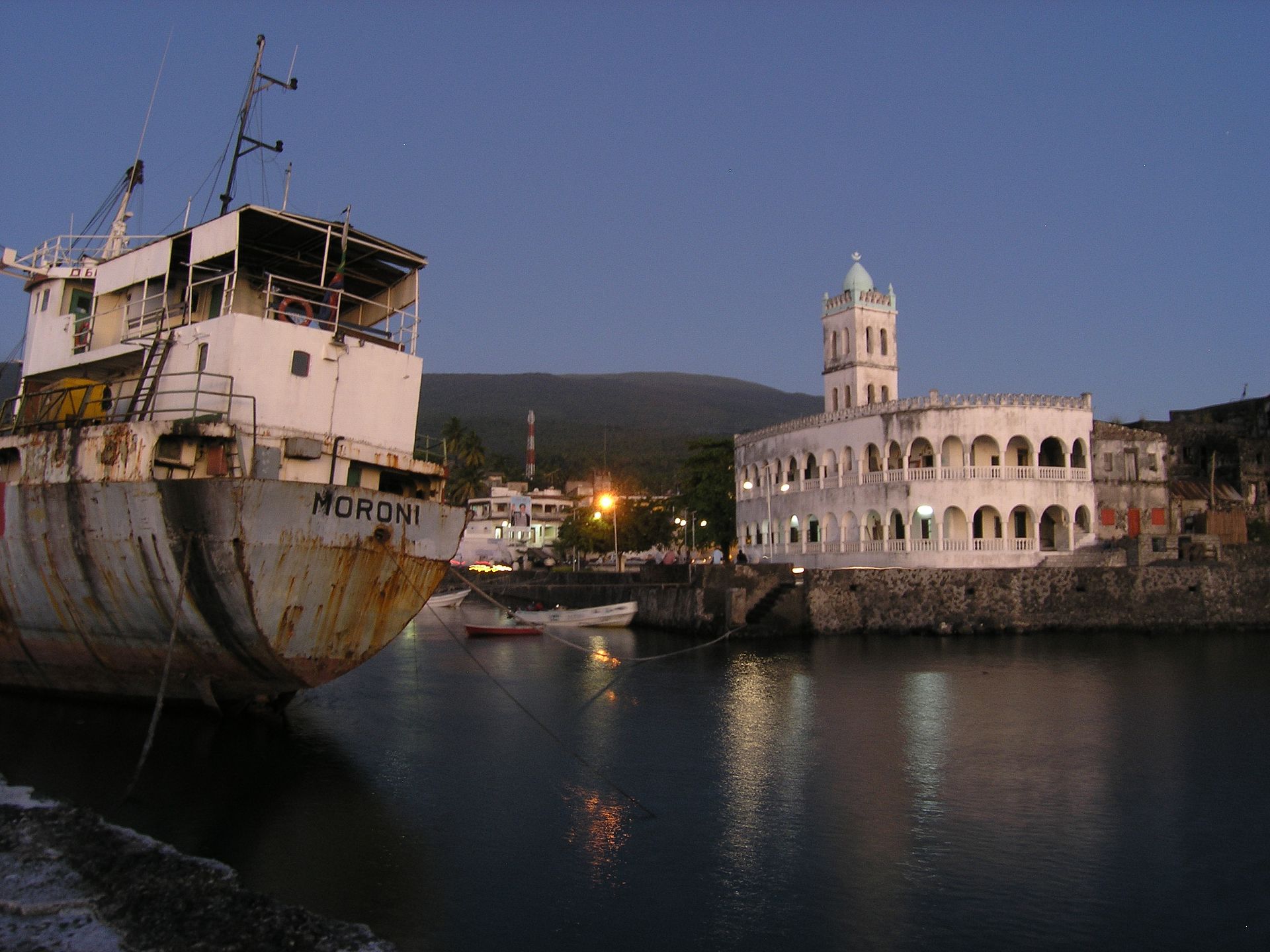
It describes Moroni, from the 14th century, with a Friday Mosque with a green minaret, a dhow port, paved alleyways and multi-storey houses with carved doors. Itsandra is a maritime medina considered a cradle of Swahili civilisation. Iconi dates to the 12th century and holds the tomb of Prince Said Ibrahim, son of the last sultan.[3]
The official assessment called the medinas highly vulnerable, with several in serious disrepair. The culture minister said the listing was not a finish line but a starting point, and officials stressed that these are living towns where people still pray, trade and celebrate.[3]
- Almost everything beyond the listing year: which medinas, their history and what residents say about them.
- Local voices: none yet.
- That report does not describe the two Anjouan medinas one by one, and residents' and craftspeople's accounts are not included.
Sources
- Institutional[1] The Medinas of the Historic Sultanates of the Comoros. UNESCO World Heritage Centre, World Heritage List (open data, CC BY-SA 4.0). whc.unesco.org retrieved 7 Oct 2026
Read from UNESCO's open-data record (data.unesco.org, dataset whc001); the web page itself could not be opened from this project's tools. Texts are UNESCO's own. - Encyclopedia · to verify[2] List of World Heritage Sites in Comoros. Wikipedia. en.wikipedia.org retrieved 7 Oct 2026
Used for background that the UNESCO record does not give. Each statement is limited to the article's lead and opening sections; confirm against specialist sources. - Press[3] Six ancient Comoros medinas join UNESCO's heritage list. AFP (via Gulf Times), 25 Jul 2026. www.gulf-times.com retrieved 7 Oct 2026
A wire report on the day of the listing, in Busan.