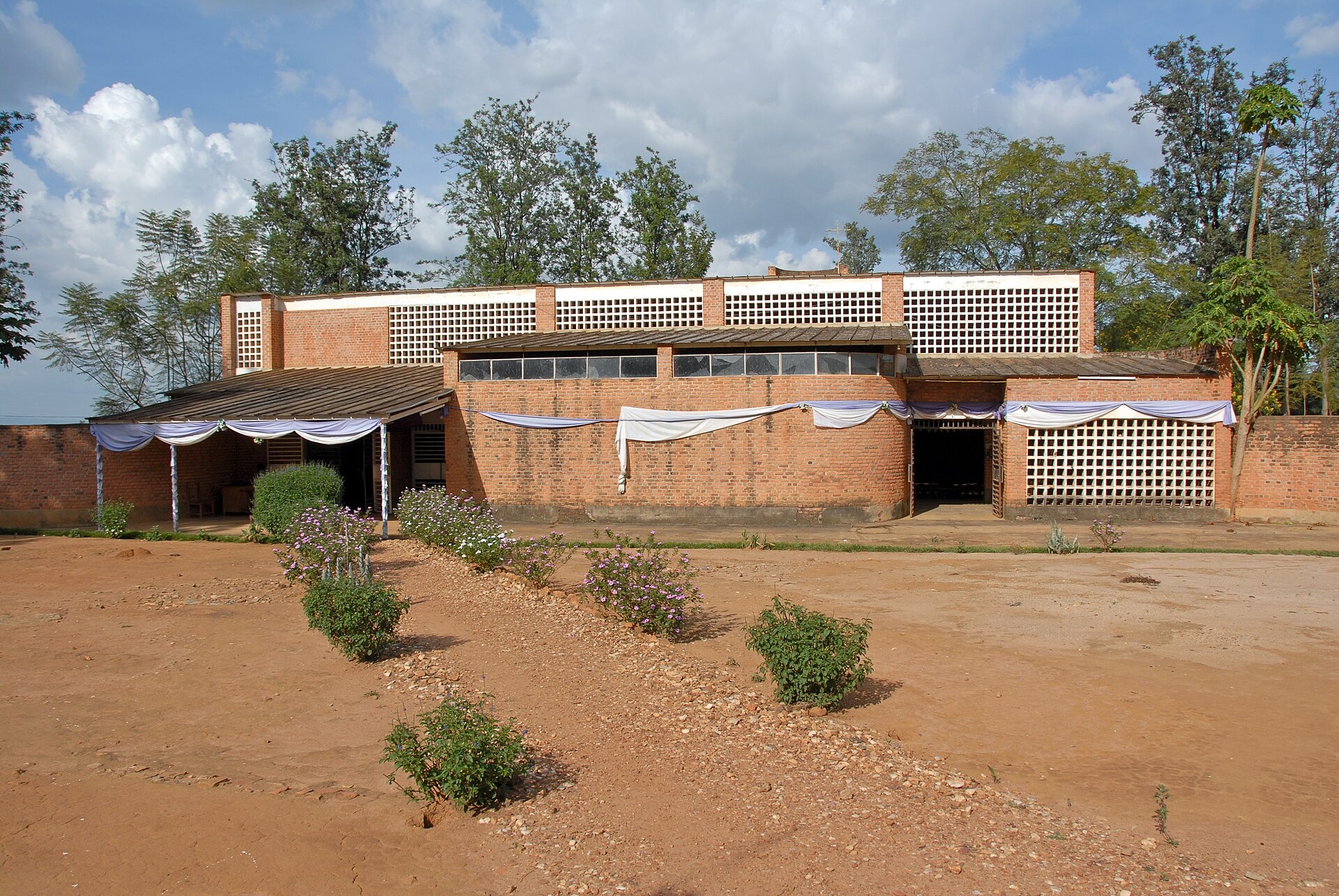
What UNESCO says
UNESCO describes the property in these words: “Between April and July 1994, an estimated one million people were killed across Rwanda by armed militias called Interahamwe that targeted Tutsi, but also executed moderate Hutu and Twa people. The victims of the genocide are commemorated in this serial property composed of four memorial sites. Two of the component parts were scenes of massacres: a Catholic church built in the hill of Nyamata in 1980, and a technical school built in the hill of Murambi in 1990. The hill of Gisozi in Kigali City hosts the Kigali Genocide Memorial built in 1999, where more than 250,000 victims have been buried, while the hill of Bisesero in the Western Province hosts a memorial built in 1998, to remember the fight of those who resisted their perpetrators for over two months before being exterminated.”[1]
Background
The property includes four memorial sites. Only one of them, Gisozi, is the Kigali Genocide Memorial, which this card draws on; Nyamata, Murambi and Bisesero are not covered here.[2] Wikipedia says the Gisozi memorial commemorates the 1994 genocide against the Tutsi and holds the remains of over 250,000 people. It is run by the Aegis Trust on behalf of the National Commission for the Fight Against Genocide.[2] The article says that precisely how many people were killed may never be known, that estimates vary from 500,000 to over a million, and that a figure close to 800,000 is widely accepted.[2]
The four sites, as reported in 2023
France 24 reported on 20 September 2023 that UNESCO had added four memorials to the World Heritage list. At Nyamata, it says, more than 45,000 people who had sought shelter in the church were killed in one day, and the chapel holds the clothing and rosaries worn by victims along with the weapons used by the perpetrators.[3]
At Murambi, tens of thousands of people who had been encouraged to take refuge in a technical school were executed. Gisozi, the Kigali Genocide Memorial, is the final resting place of around 250,000 victims. At Bisesero, a resistance memorial built in 1998 honours Tutsis who fought back with spears and stones.[3]
The government spokeswoman Yolande Makolo said the decision would help safeguard memory, counter denial and strengthen genocide prevention, and the survivor Marie Grace Mukabyagaju said the memorials would be there as long as possible.[3]
- The other three sites, and survivors' own accounts: the right voices here are those of survivors and Rwandan historians, and this card has none of them yet.
- The wording of the numbers and of the genocide's history should be checked with Rwandan institutions before publication.
- Local voices: none yet.
- Figures differ between reports (for instance the number killed at Nyamata); the numbers here are one news agency's and the official counts should be consulted. Survivors' and communities' own accounts are not included.
Sources
- Institutional[1] Memorial sites of the Genocide: Nyamata, Murambi, Gisozi and Bisesero. UNESCO World Heritage Centre, World Heritage List (open data, CC BY-SA 4.0). whc.unesco.org retrieved 7 Oct 2026
Read from UNESCO's open-data record (data.unesco.org, dataset whc001); the web page itself could not be opened from this project's tools. Texts are UNESCO's own. - Encyclopedia · to verify[2] Kigali Genocide Memorial. Wikipedia. en.wikipedia.org retrieved 7 Oct 2026
Used for background that the UNESCO record does not give. Each statement is limited to the article's lead and opening sections; confirm against specialist sources. - Press[3] UNESCO puts Rwanda genocide memorials on World Heritage list. France 24, 20 Sep 2023. www.france24.com retrieved 7 Oct 2026
A news agency report on the day of the listing.