What UNESCO says
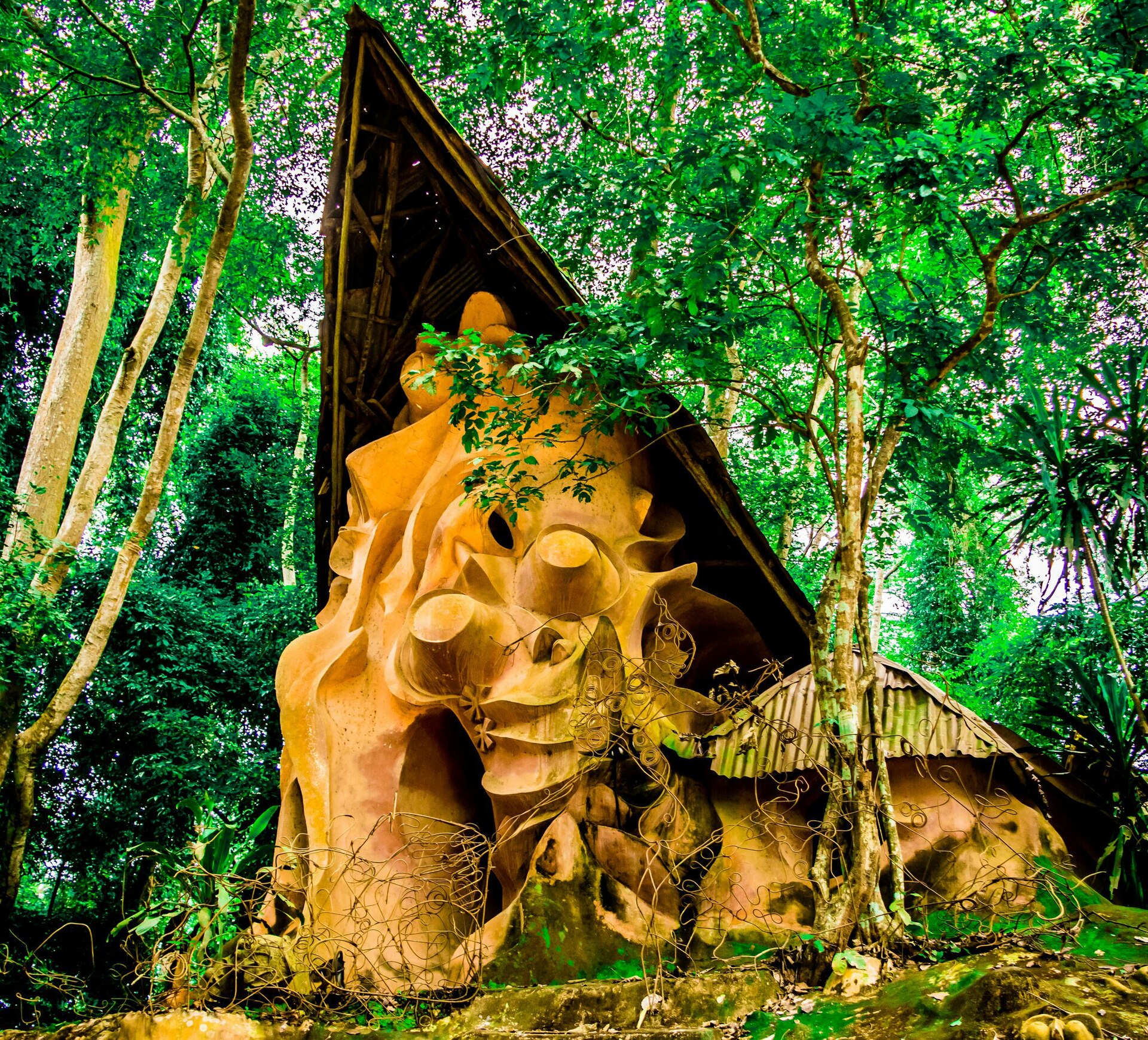
UNESCO describes the property in these words: “The dense forest of the Osun Sacred Grove, on the outskirts of the city of Osogbo, is one of the last remnants of primary high forest in southern Nigeria. Regarded as the abode of the goddess of fertility Osun, one of the pantheon of Yoruba gods, the landscape of the grove and its meandering river is dotted with sanctuaries and shrines, sculptures and art works in honour of Osun and other deities. The sacred grove, which is now seen as a symbol of identity for all Yoruba people, is probably the last in Yoruba culture. It testifies to the once widespread practice of establishing sacred groves outside all settlements.”[1]
Background
The grove runs along the Osun river just outside Osogbo. Wikipedia calls it several centuries old and one of the last sacred forests that once bordered most Yoruba cities.[2] It says the grove was desecrated in the 1950s: shrines were neglected, priests left, and fishing, hunting and tree-felling were done freely.[2] The article credits the Austrian artist Susanne Wenger (1915–2009), with the support of the Ataoja, the city's king, and of local people, with restoring the traditional protections through the New Sacred Art movement.[2]
The festival, as reported in 2018
France 24 reported in August 2018 that thousands of Yoruba, an ethnic group of around 40 million, were celebrating Osun, whom it describes as the goddess of fertility and water and the wife of Sango, god of fire and thunder.[3]
At the centre of the ritual is the Arugba, a virgin whose face is covered with a scarlet cloth embroidered with shells, who brings offerings to the river where participants believe the goddess's spirit lives. The offerings include sacrificed chickens, ochre powder, potato chips and gin.[3]
The report says the grove was designated a World Heritage site in 2005 and that many participants blend Yoruba belief with Islam and Christianity, quoting one attendee: if your prayers do not work with one God, try the other ones.[3]
- Wenger's role as seen by Yoruba voices: the sources read credit her; whether that is how the community tells it is not shown.
- Local voices: none yet.
- Worshippers' and priests' own account of the festival and the grove: the 2018 report was written for a foreign audience and gives only a few quotations.
Sources
- Institutional[1] Osun-Osogbo Sacred Grove. UNESCO World Heritage Centre, World Heritage List (open data, CC BY-SA 4.0). whc.unesco.org retrieved 7 Oct 2026
Read from UNESCO's open-data record (data.unesco.org, dataset whc001); the web page itself could not be opened from this project's tools. Texts are UNESCO's own. - Encyclopedia · to verify[2] Osun-Osogbo. Wikipedia. en.wikipedia.org retrieved 7 Oct 2026
Used for background that the UNESCO record does not give. Each statement is limited to the article's lead and opening sections; confirm against specialist sources. - Press[3] In Nigeria, thousands celebrate Osun, goddess of fertility and water. France 24, 19 Aug 2018. www.france24.com retrieved 7 Oct 2026
A report on the August 2018 festival, written for a foreign audience.