What UNESCO says
UNESCO describes the property in these words: “Robben Island was used at various times between the 17th and 20th centuries as a prison, a hospital for socially unacceptable groups and a military base. Its buildings, particularly those of the late 20th century such as the maximum security prison for political prisoners, witness the triumph of democracy and freedom over oppression and racism.”[1]
Background
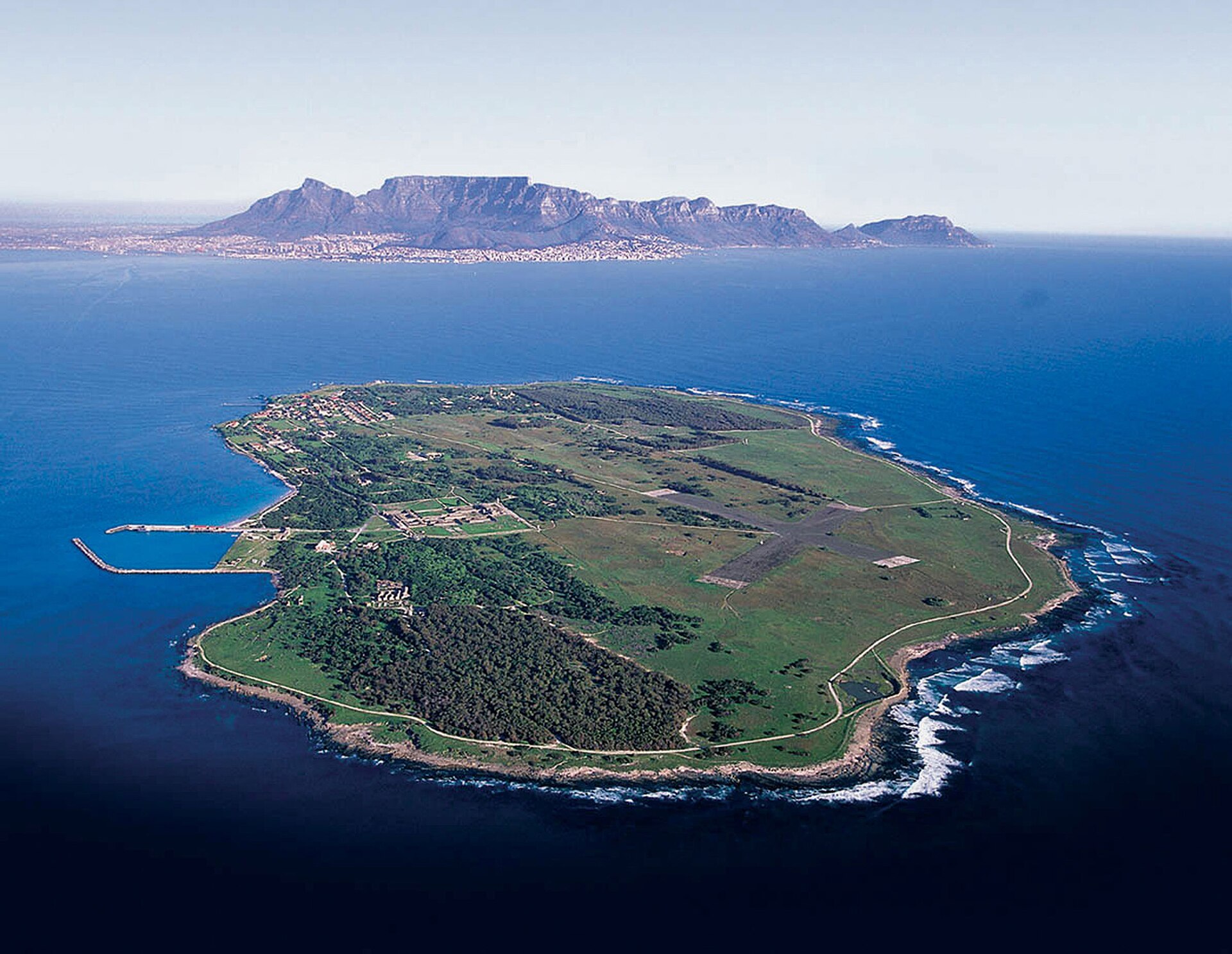
Robben Island lies in Table Bay, 6.9 kilometres from the coast north of Cape Town. Wikipedia says the name comes from the old Dutch word for seals, and that the island is flat, 3.3 kilometres long and 1.9 wide, with an area of 5.08 km².[2] It was fortified and used as a prison from the late 17th century until 1996.[2] In the late 20th century political prisoners opposed to apartheid were held there. Nelson Mandela was imprisoned on the island for 18 of his 27 years in prison.[2]
Looking after the island, as reported in 2009
In October 2009 the BBC reported that authorities in Cape Town were gravely concerned about the island's state, with thousands of feral rabbits harming wildlife and undermining historic buildings.[3]
The island sits seven kilometres from Cape Town's beaches and, the report says, received more than 1,800 tourists a day at peak times. Nelson Mandela was held there for most of his 27 years in jail.[3]
A journalist quoted by the BBC put the rabbits at up to 25,000 and said about 500 fallow deer were being shot by a team of ten hunters. The city and the province warned that poor management risked the loss of World Heritage status.[3]
- Former prisoners' own accounts, including the guides who are ex-prisoners. The article read here gives none.
- The island's earlier uses, as quarantine and leper colony and as a military base, which the part read here does not reach.
- Local voices: none yet.
- The state of the island in "Looking after the island" is as of 2009 and one news report: rabbit numbers and the site's management have since changed and are not updated here.
Sources
- Institutional[1] Robben Island. UNESCO World Heritage Centre, World Heritage List (open data, CC BY-SA 4.0). whc.unesco.org retrieved 7 Oct 2026
Read from UNESCO's open-data record (data.unesco.org, dataset whc001); the web page itself could not be opened from this project's tools. Texts are UNESCO's own. - Encyclopedia · to verify[2] Robben Island. Wikipedia. en.wikipedia.org retrieved 7 Oct 2026
Used for background that the UNESCO record does not give. Each statement is limited to the article's lead and opening sections; confirm against specialist sources. - Press[3] Robben Island is 'under threat'. BBC News, 31 Oct 2009. news.bbc.co.uk retrieved 7 Oct 2026
A short news report from 2009; numbers are estimates quoted from a newspaper journalist.