Sources beyond UNESCO and Wikipedia: 2 (2 press). Check each source's status in the list at the end of the card. It was published without a prior review by people from the place. If something is wrong or missing, tell the project.
This card keeps two kinds of knowledge apart: what the documented record says, and what the people who know the place say. Each is labelled, so a reader always knows which one they are reading.
In the record cited to a source
From people who know this place one person's experience, shown as theirs
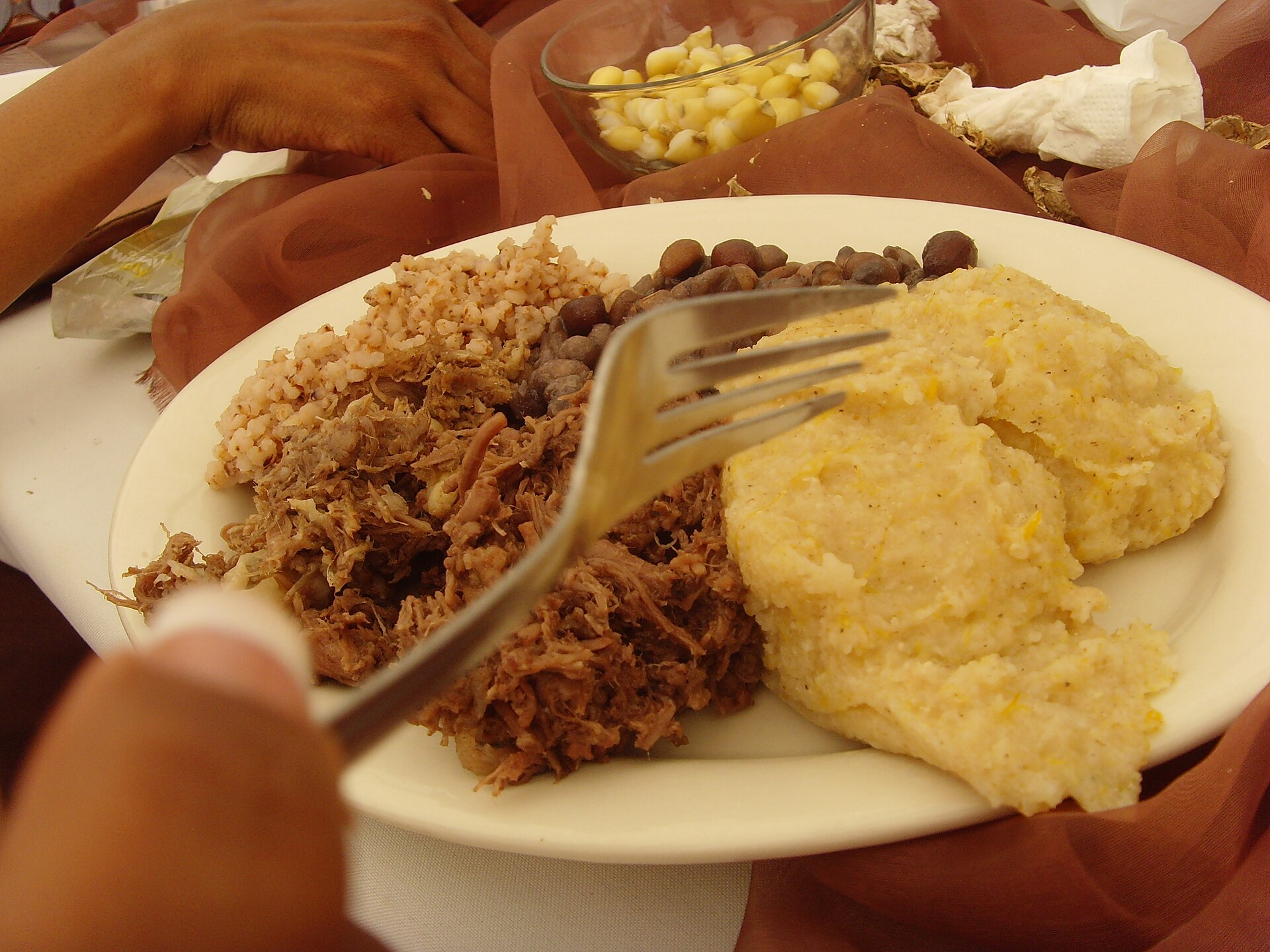
Seswaa is a salty pounded meat dish prepared by men, simmered until soft with salt, cooking oil and water in a three-legged iron pot, a student writes.[1] It is a standard delicacy at most traditional events, including weddings and funerals.[1]
A safari company calls it Botswana's national dish and says beef is boiled slowly with little more than water and salt.[2]
How it is made
Large iron pots simmer over wood fires for hours; when the meat is tender it is lifted into large carved wooden mortars and pounded with heavy pestles until the fibres separate.[2]
The two sources differ on details: one lists cooking oil among the ingredients and speaks of the dish as prepared by men; the other says several people work together, with elders supervising by experience rather than by the clock.[1][2]
At the table
Meals pair a protein with a starch and a relish. Starches the student lists include sorghum mixed with yellow melon and sour milk, samp with beans, and flat breads.[1] The safari company says seswaa is served with bogobe, a sorghum porridge, and madila, fermented milk.[2]
The safari company writes that nothing about seswaa is individual: it is prepared collectively, served generously and eaten together, and offering it to guests means welcoming them into the community.[2]
Not yet sourced
Where the dish comes from and how old it is. Neither source gives a history, and the safari company's article does not cite any.
The voice of Batswana cooks. The sources are a visiting student and a travel company writing for outsiders.
The name seswaa and its variants in different parts of Botswana and South Africa: not covered by the sources read.
Quantities and cuts of meat: not given.
Where to eat it, and what it costs.
The photograph shows a plate with samp, beans and seswaa; where it was taken is not stated.
Sources
Press[1] Delicately flavored Dijo tsa Setswana (Setswana traditional food). CIEE study abroad blog. ciee.orgretrieved 8 Oct 2026 A study-abroad student's blog post on food in Botswana. A first-hand account written for other students.
Press · to verify[2] The soul of Botswana: a culinary journey through the heart of Southern Africa. Chalo Africa. www.chaloafrica.comretrieved 8 Oct 2026 A safari travel company's article, written to attract travellers; its claims are not sourced.