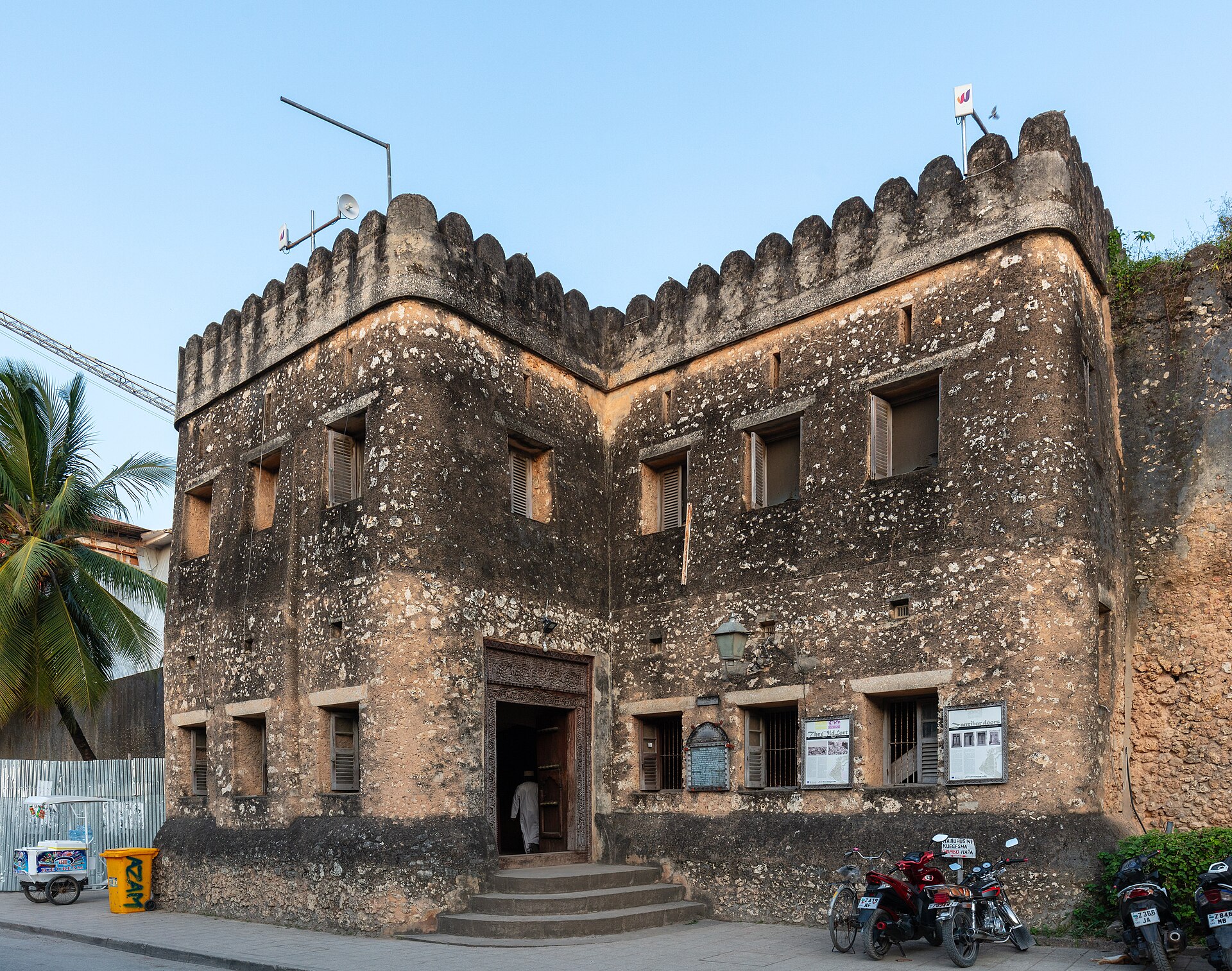
What UNESCO says
UNESCO describes the property in these words: “The Stone Town of Zanzibar is a fine example of the Swahili coastal trading towns of East Africa. It retains its urban fabric and townscape virtually intact and contains many fine buildings that reflect its particular culture, which has brought together and homogenized disparate elements of the cultures of Africa, the Arab region, India, and Europe over more than a millennium.”[1]
Background
Stone Town, also called Mji Mkongwe, 'old town' in Swahili, is the old part of Zanzibar City, on the west coast of Unguja. The newer part is Ng'ambo, 'the other side'.[2] Wikipedia calls it the former capital of the Sultanate of Zanzibar and a flourishing centre of the spice trade and of the Indian Ocean slave trade in the 19th century.[2] Its architecture, mostly from the 19th century, mixes Arab, Persian, Indian and European influences. It was designated a World Heritage Site in 2000.[2]
Walking through it, as a journalist saw it in 2017
Arab News described Stone Town in 2017 as a centre for both the slave and the spice trades under Omani rule. The House of Wonders was built by Sultan Barghash bin Said in 1883.[3] Christ Church Cathedral stands on the site of the former slave market, with a marble circle marking where a whipping post once stood.[3]
At St. Monica's Lodge, built in the late nineteenth century, two underground chambers are shown where enslaved people were held. A guide told the writer there were fifty men in one room and seventy-five women and children in the other, kept two or three days without food or water.[3] The figures are the guide's, as quoted.[3]
The article called the old town virtually intact, though its architecture is crumbling.[3]
- What residents say about tourism and the loss of old houses.
- Local voices: none yet.
- The slave trade in Zanzibar in detail: the guide's numbers at St. Monica's Lodge are one account and no historical count is given here.
- What residents say about tourism and the loss of old houses.
Sources
- Institutional[1] Stone Town of Zanzibar. UNESCO World Heritage Centre, World Heritage List (open data, CC BY-SA 4.0). whc.unesco.org retrieved 7 Oct 2026
Read from UNESCO's open-data record (data.unesco.org, dataset whc001); the web page itself could not be opened from this project's tools. Texts are UNESCO's own. - Encyclopedia · to verify[2] Stone Town. Wikipedia. en.wikipedia.org retrieved 7 Oct 2026
Used for background that the UNESCO record does not give. Each statement is limited to the article's lead and opening sections; confirm against specialist sources. - Press[3] Iain Akerman, Exploring Stone Town, Zanzibar's historical gem. Arab News, 31 May 2017. www.arabnews.com retrieved 7 Oct 2026
A travel article. It quotes a guide on the slave chambers: treat the numbers as one person's account.