What it is
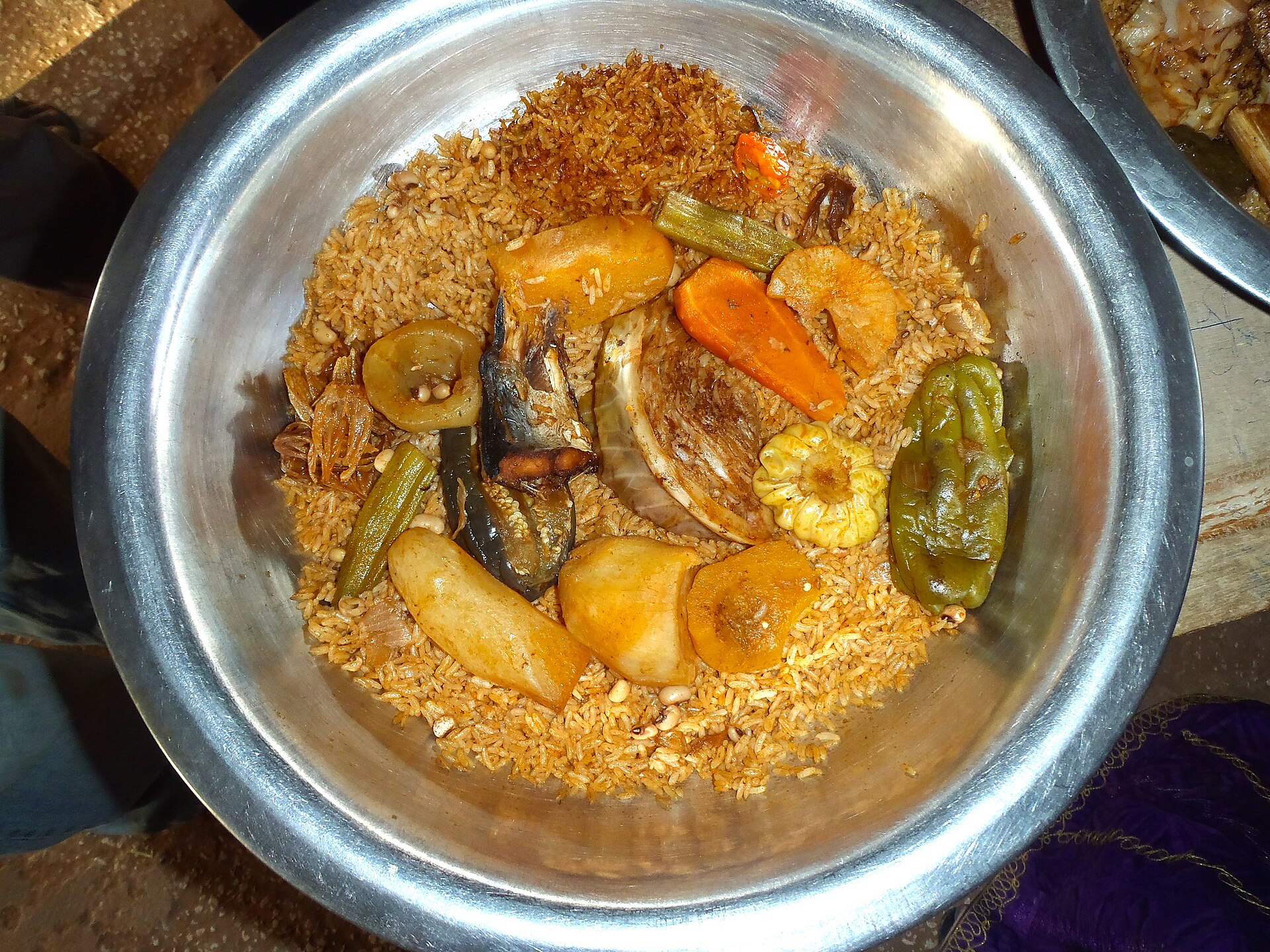
Thieboudienne, in Wolof ceebu jën or "rice with fish", is a dish of rice and fish with a variety of vegetables, made with or without tomato.[1][2] The AFP report names onions, garlic, carrots and aubergines among the vegetables, and says it takes about three hours to prepare and is typically served at lunch.[1]
- Name
- ceebu jën, "rice with fish" in Wolof[1]
- Cooked
- about three hours, usually eaten at lunch[1]
- Often called
- Senegal's national dish[2]
A tourism website calls it Senegal's national dish.[2]
UNESCO, December 2021
In December 2021 UNESCO added thieboudienne to its list of the Intangible Cultural Heritage of Humanity, following an application from Senegal's government in October.[1] UNESCO said the recipe and techniques are traditionally passed down from mother to daughter.[1]
The report adds two rules of eating: do not sit with a raised knee, and do not drop a grain of rice.[1]
A restaurant owner, Thiane Ngom, who has kept the dish on her menu for 25 years, told AFP it was a source of pride for Senegalese that it was recognised worldwide.[1]
Where it comes from
The northern city of Saint-Louis, a former French colonial capital, is believed to be the birthplace. According to UNESCO, quoted by AFP, the dish emerged through colonial trade, when rice produced in French Indochina was imported into Senegal.[1]
Popular tradition credits a cook named Penda Mbaye, and the tourism site places her in Guet-Ndar, a village of Saint-Louis. Both give it as tradition or attribution, not as a documented fact.[1][2]
- Who actually invented the dish, if one person did. The only sources are a news report calling it tradition and a tourism page; no historian is cited.
- How the dish differs between households and regions: the sources read describe one basic form and do not say how the versions with and without tomato are made or eaten.
- UNESCO's own text. Its page could not be read, so everything attributed to UNESCO comes from the AFP report.
- Where to eat it, and what it costs.
- The photograph shows a bowl of the dish; where it was taken is not stated on its page.
Sources
- Press[1] Senegal fish dish wins Unesco recognition (AFP, republished by Free Malaysia Today). AFP, via Free Malaysia Today, 16 Dec 2021. www.freemalaysiatoday.com retrieved 8 Oct 2026
A news agency report of the UNESCO decision, republished on 16 December 2021. It quotes UNESCO's text but UNESCO's own page was not read. - Press · to verify[2] Thieboudienne / ceebu jën. Visitez le Sénégal. www.visitezlesenegal.com retrieved 8 Oct 2026
A tourism website. It calls the dish the national dish and credits its invention to Penda Mbaye of Guet-Ndar, which the card presents as a tradition, not as documented history.