What UNESCO says
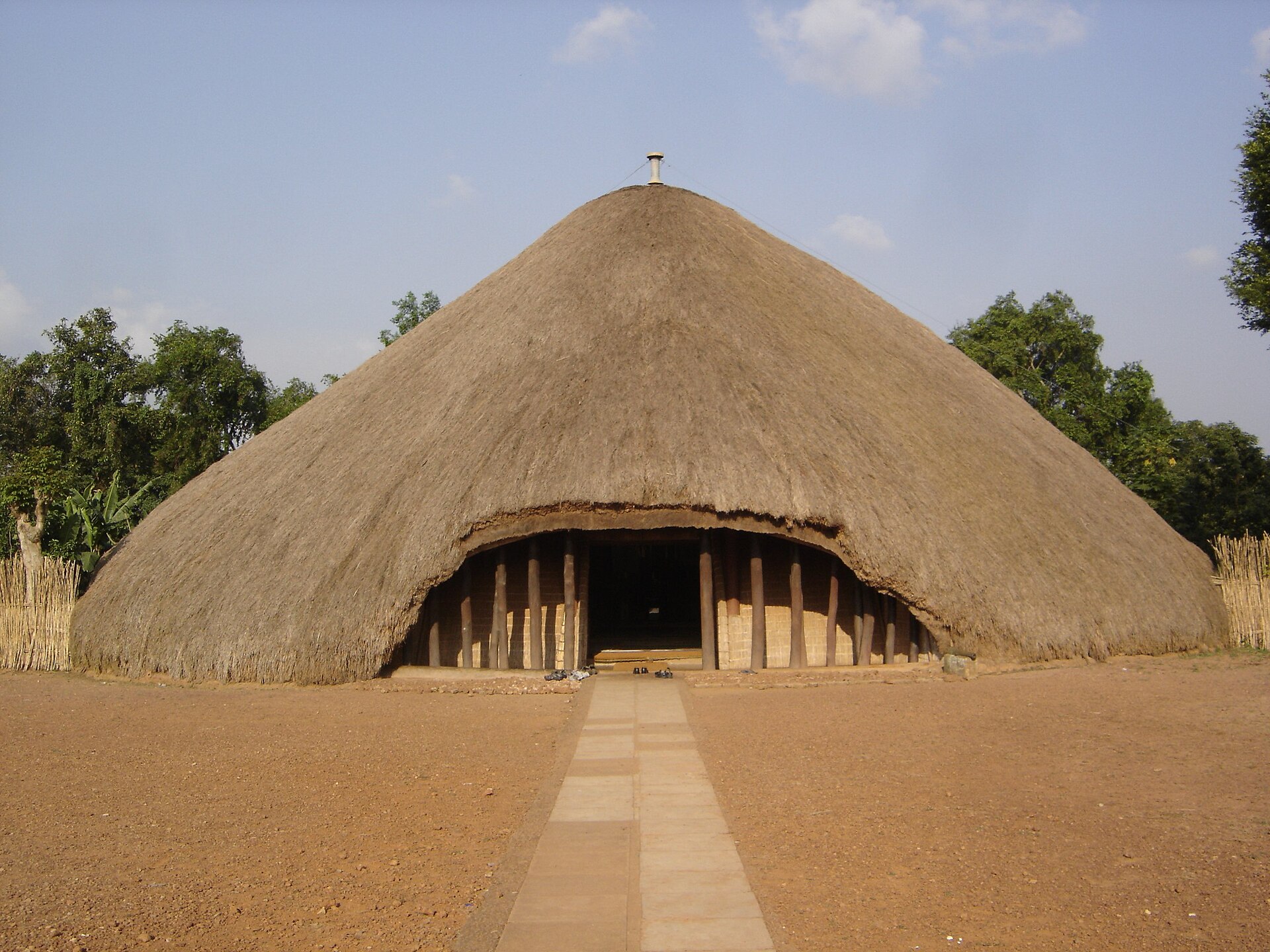
UNESCO describes the property in these words: “The Tombs of Buganda Kings at Kasubi constitute a site embracing almost 30 ha of hillside within Kampala district. Most of the site is agricultural, farmed by traditional methods. At its core on the hilltop is the former palace of the Kabakas of Buganda, built in 1882 and converted into the royal burial ground in 1884. Four royal tombs now lie within the Muzibu Azaala Mpanga, the main building, which is circular and surmounted by a dome. It is a major example of an architectural achievement in organic materials, principally wood, thatch, reed, wattle and daub. The site's main significance lies, however, in its intangible values of belief, spirituality, continuity and identity.”[1]
Background
The Kasubi Tombs, in Kampala, are the burial ground of four kabakas, the kings of Buganda, and other members of the royal family. Wikipedia calls the site an important spiritual and political place for the Ganda people.[2] Major buildings there were almost completely destroyed by fire in March 2010, and the article says the cause was under investigation. The site was put on the List of World Heritage in Danger in July 2010.[2] Reconstruction began in 2014, funded by a fundraising campaign called Etofaali and by the government of Japan. After the buildings were restored in 2023, the article says, the site was removed from the danger list.[2]
After the fire, as reported in 2023
France 24 reported in August 2023 that a fire destroyed the main tomb building, Muzibu-Azaala-Mpanga, a circular, domed structure built in 1882 that UNESCO had called an architectural masterpiece. At least two people were killed when security forces put down riots after the fire.[3]
The tombs were declared a World Heritage site in 2001 and later placed on the danger list. UNESCO recommended in August 2023 that they be removed from it, after reconstruction with international funding, and said the removal would be a powerful symbol given that half of the sites in danger are in Africa.[3]
- The Buganda Kingdom's own account of the fire and the rebuilding, and of what the tombs mean today.
- The cause of the 2010 fire, which the article describes as still under investigation.
- Local voices: none yet.
- That report was written before the World Heritage Committee met in September 2023: the committee's decision is not covered here. The Buganda kingdom's and caretakers' own accounts of the fire and the rebuilding are not here either.
Sources
- Institutional[1] Tombs of Buganda Kings at Kasubi. UNESCO World Heritage Centre, World Heritage List (open data, CC BY-SA 4.0). whc.unesco.org retrieved 7 Oct 2026
Read from UNESCO's open-data record (data.unesco.org, dataset whc001); the web page itself could not be opened from this project's tools. Texts are UNESCO's own. - Encyclopedia · to verify[2] Kasubi Tombs. Wikipedia. en.wikipedia.org retrieved 7 Oct 2026
Used for background that the UNESCO record does not give. Each statement is limited to the article's lead and opening sections; confirm against specialist sources. - Press[3] UNESCO backs removal of Uganda tombs from endangered list. France 24, 28 Aug 2023. www.france24.com retrieved 7 Oct 2026
Written before the World Heritage Committee's decision in September 2023.