What UNESCO says
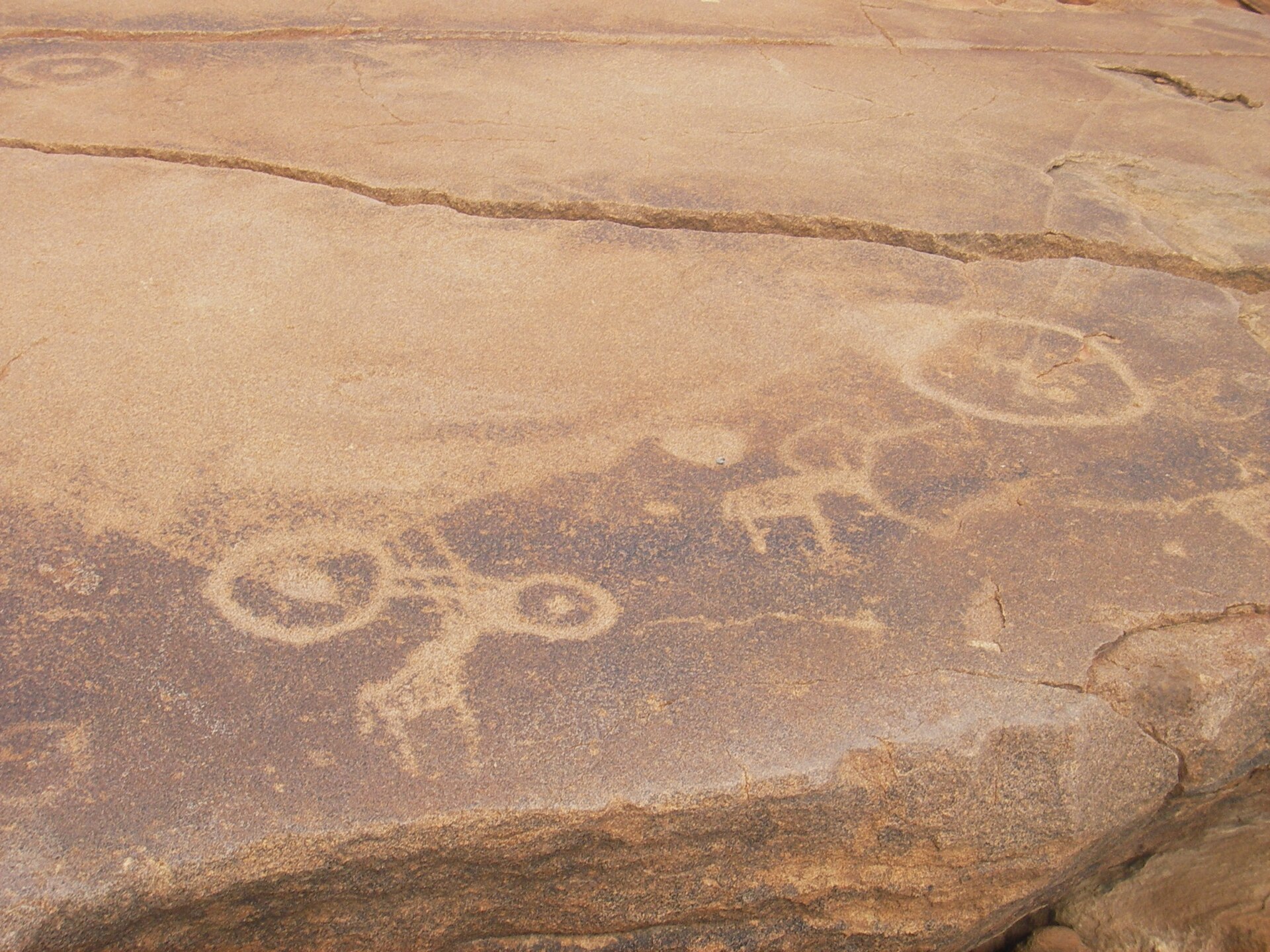
UNESCO describes the property in these words: “Twyfelfontein or /Ui-//aes has one of the largest concentrations of ... petroglyphs, i.e. rock engravings in Africa. Most of these well-preserved engravings represent rhinoceros, . The site also includes six painteelephant, ostrich and giraffe, as well as drawings of human and animal footprintsd rock shelters with motifs of human figures in red ochre. The objects excavated from two sections, date from the Late Stone Age. The site forms a coherent, extensive and high-quality record of ritual practices relating to hunter-gatherer communities in this part of southern Africa over at least 2,000 years, and eloquently illustrates the links between the ritual and economic practices of hunter-gatherers.”[1]
Background
Twyfelfontein, officially ǀUi-ǁAis, 'jumping waterhole', is a site of ancient rock engravings in the Kunene Region of north-western Namibia. It centres on a spring in a valley below a sandstone table mountain that gets very little rain.[2] Wikipedia says the valley has been inhabited for 6,000 years, first by hunter-gatherers and later by Khoikhoi herders, who both used it as a place of worship and shamanist ritual. At least 2,500 engraved items have been made there, with a few rock paintings.[2] UNESCO approved it in 2007 as Namibia's first World Heritage Site, and the article calls it one of the largest concentrations of petroglyphs in Africa.[2]
The engravings, as the British Museum's archive describes them
The British Museum's African rock art archive calls Twyfelfontein, or /Ui-//aes, the largest single grouping of ancient engraved images in southern Africa. The core area covers about 57 hectares, near a small but permanent spring.[3]
It says the site was first formally noted by Reinhard Maack in a 1921 report, and that the name Twyfelfontein, Afrikaans for "doubtful spring", came from the farmer David Levin, whose worry about the spring's survival gave it that name. /Ui-//aes means "place among rocks" or "jumping waterhole" in Khoekhoegowab, the language of the Damara.[3]
A 2005 survey of the core site found 2,075 individual images on 235 rock surfaces. Giraffes are the most numerous animals, followed by rhinoceroses, zebra, gemsbok and ostriches, and human figures are almost absent. The best known image is the "dancing kudu", a polished kudu cow surrounded by geometric shapes.[3]
The archive says the ancestors of the San are thought to have made most of southern Africa's rock paintings and engravings, and that it has been suggested the kudu was chosen in relation to female initiation practices.[3]
- Damara/Nama and San voices on the site and its management.
- Dating of the engravings, which the article gives only in broad terms.
- Local voices: none yet.
- That is the museum's account; the Damara and San communities' own understanding of the engravings is not presented here, and the kudu's meaning is a suggestion, not established.
Sources
- Institutional[1] Twyfelfontein or /Ui-//aes. UNESCO World Heritage Centre, World Heritage List (open data, CC BY-SA 4.0). whc.unesco.org retrieved 7 Oct 2026
Read from UNESCO's open-data record (data.unesco.org, dataset whc001); the web page itself could not be opened from this project's tools. Texts are UNESCO's own. - Encyclopedia · to verify[2] Twyfelfontein. Wikipedia. en.wikipedia.org retrieved 7 Oct 2026
Used for background that the UNESCO record does not give. Each statement is limited to the article's lead and opening sections; confirm against specialist sources. - Institutional[3] Twyfelfontein | /Ui-//aes, Namibia. The British Museum, African Rock Art (with the Trust for African Rock Art). africanrockart.britishmuseum.org retrieved 7 Oct 2026
The site's security certificate did not verify from the tools used; the text was read with verification switched off.