🇳🇱 Amsterdam
Western Europe
- Zuidoost: Zuidoost (Dutch for Southeast), often colloquially referred to as the Bijlmer, is a borough of Amsterdam. It is an exclave, separated from the mainland by Duivendrecht and Diemen. With no shared borde...
- Canal District: The Canal District (Dutch: Grachtengordel) is the famous 17th-century district surrounding the Binnenstad of Amsterdam. The whole district is designated as a UNESCO World Heritage Site for its unique ...
- Oost: Oost (Dutch for East) is a borough of Amsterdam. It lies between the Amstel River in the west and the IJ in the east. It should not be regarded as a homogeneous area, as there are many different neigh...
- Jordaan: The Jordaan is a district in the centre of Amsterdam. It used to be a working-class neighbourhood, but has become one of the most upscale areas of the Netherlands, known for its art galleries, special...
- Noord: Noord (Dutch for North) is the borough of Amsterdam north of the IJ. It is a residential district, and with about 86,000 inhabitants, it is a medium-sized city (and it is growing at a rapid pace—three...
- 'Skek
- 't Sluisje
- Arie Op De Hoek
- Bar Botanique Cafe Tropique
- Bax
- Bern
- Brouwerij 't IJ
- Cafe 't Podium
- Gaasper Camping Amsterdam (Off-season from €16.25, from €18.50 during high-season)
- A&O Amsterdam Zuidoost (€24)
- Campanile Hotel Amsterdam (Prezzo N/D)
- Tulip Inn Amsterdam Riverside (€78)
- EasyHotel Amsterdam Arena Boulevard (Doubles from €49)
From Schiphol Airport. The train station is located directly beneath the airport. From the arrivals hall, walk through Schiphol Plaza to reach the train station.
Global hub of sustainable innovation, Amsterdam excels in bicycle mobility and creative water-space management. It combines unique economic dynamism with a top-tier social and urban safety network.
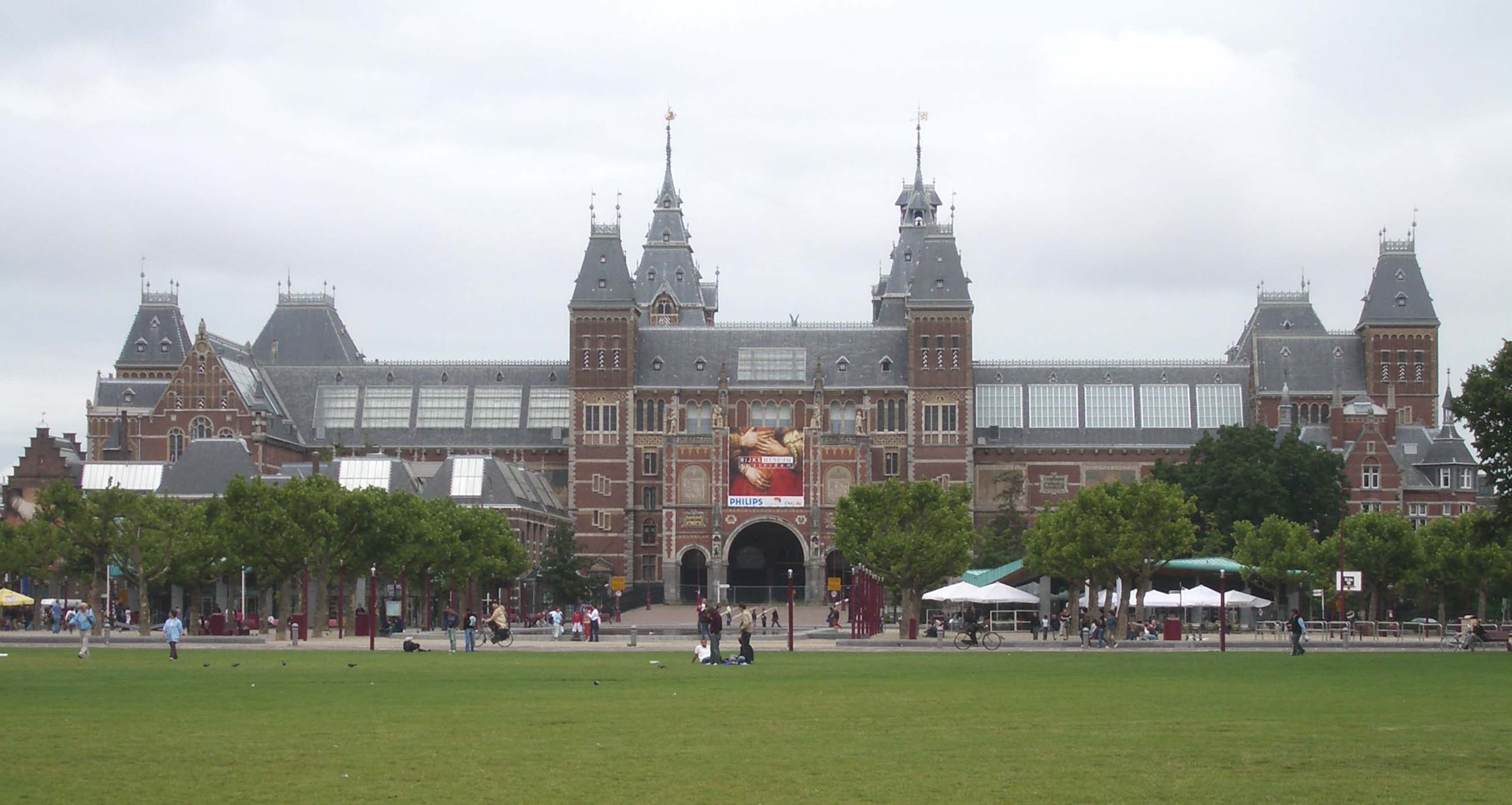
Amsterdam is the capital of the Netherlands. It is known for the canals that cross the city, its impressive architecture, museums and art galleries, its notorious red light district, and more than 1,500 bridges. The city has earned the title of Venice of the North for a good reason: few other cities have intricate web of canals, exquisite architecture, and a staggering collection of over 1500 bridges weave an undeniable charm. Whether you're here for the rich cultural heritage, the vibrant nightlife, or the serene alleyways, Amsterdam's magnetic pull is universal. Although once an innocuous and humble fishing village during the late 12th century, Amsterdam catapulted into global prominence during the 17th century as a bustling trading hub. The city's evolution birthed iconic districts like Jordaan and the Canal Belt, the latter earning UNESCO World Heritage status in 2010. The 19th and 20th centuries ushered in expansion, punctuated by modernist districts. With a population surpassing 934,000 in 2025 – and soaring well past a million when you account for the immediate surroundings – Amsterdam unquestionably holds the crown as the Netherlands' largest city. Numbers aside, Amsterdam is the financial, cultural, and creative heart of the nation. English is widely spoken and understood by almost everyone, so language barriers are rarely an issue for travellers. The "Amsterdam" that most visitors experience is the city centre, the semi-circle with Centraal Station at its apex. It corresponds to the city as it was around 1850. Five major concentric canals ring the Binnenstad: Singel, Herengracht, Keizersgracht, Prinsengracht and Singelgracht, together forming the Canal District. Other districts inside the city centre are the Jordaan, a former working class area now popular with yuppies, and Plantage, a leafy and spacious area with botanical gardens and the zoo. The Nassaukade, Stadhouderskade and Mauritskade surround the city centre and mark the location of the former city moat and fortifications. Almost everything outside this line was built after 1870. The semi-circle is on the south side of the IJ, which is often called a river but more exactly is an estuary. Going east from Centraal Station, the railway passes the artificial islands of the redeveloped Eastern Docklands. North of the IJ is mainly housing, although a major dockland redevelopment has started there too. The river Amstel flows into the city from the south. Originally, it flowed along the line Rokin-Damrak. The dam in the Amstel, which gives the city its name, was located under the present Bijenkorf department store near Dam Square. The original settlement was on the right bank of the Amstel, on the present Warmoesstraat: it is therefore the oldest street in the city. The city has expanded in all directions, except to the northeast of the A10 ring motorway.
Structured data source (DTD-validated XML — city_report.dtd):
Canonical URI (element <source_url>, also used as itemid microdata):