🇭🇷 Zagreb · Zagabria
Southern Europe
- Ambasada
- Anera
- Chillout Hostel Zagreb (From €25)
- Fulir Hostel Zagreb (Prezzo N/D)
- Funk Lounge (dorm from: €13, private from: €20)
- Hobo Bear Hostel (Dorm bed: €14)
- Hostel Lika (Dorm bed: €13.5)
Buses leave from the airport at 07:00 and every 30 minutes between 08:00 and 20:00. Beyond these hours, there are buses leaving to the main bus station every time a Croatia Airlines plane lands. When traveling to the airport from the main Zagreb bus station, the buses are scheduled between 04:30 and 20:30.
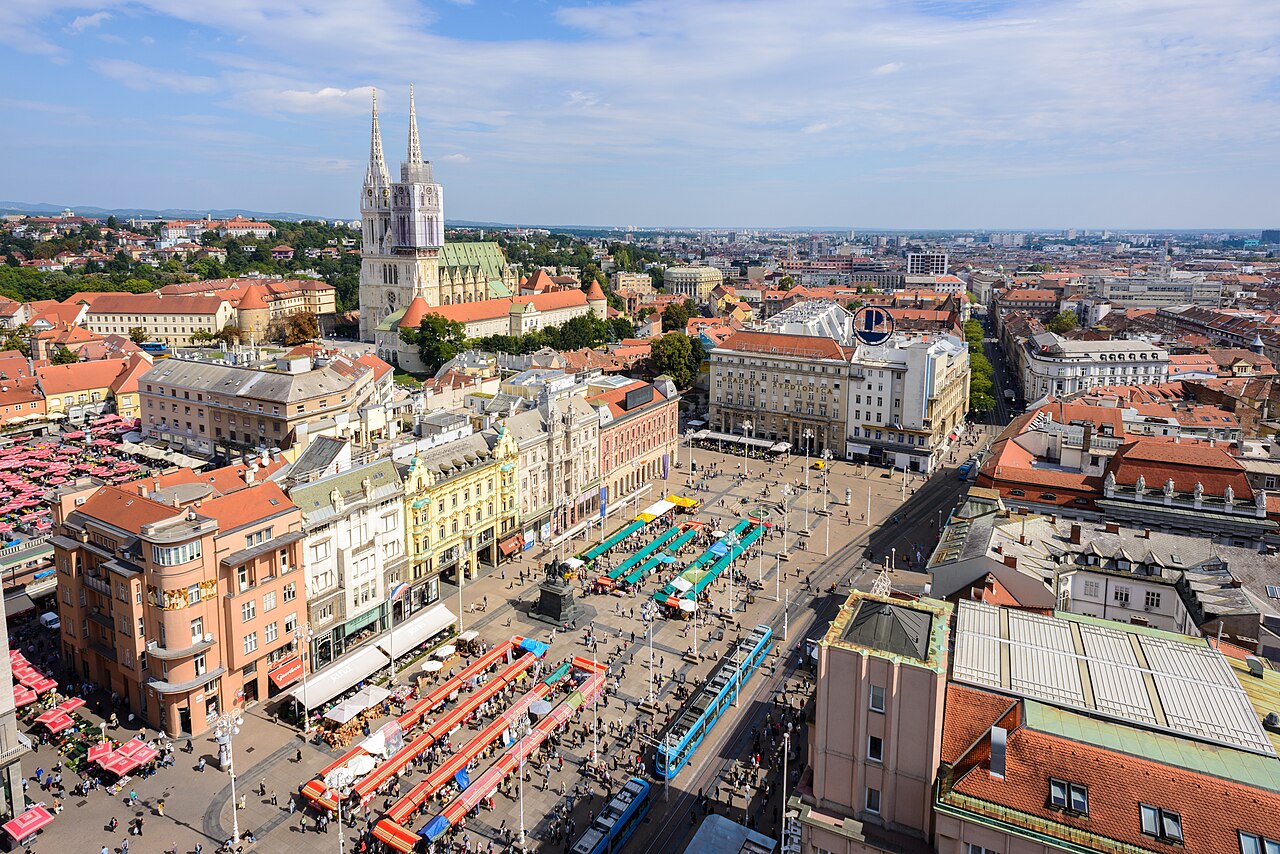
A city with a dual character, Central European and Mediterranean, Zagreb offers relaxed and safe livability. Its horseshoe-shaped parks and café life make it welcoming and lively.
Zagreb is a city in Central Croatia and the capital of Croatia. The city has a charming medieval 'old city' with architecture and cobbled streets reminiscent of Vienna, Budapest, Prague and other Central European capitals. Zagreb is a vibrant city of around 770,000 people (2021, metropolitan area: 1,100,000). In 2017 it was visited by over a million tourists, mainly from Austria, Germany and Italy. Zagreb is also well known for its Advent festival, which occurs from December to early January, boasting vibrant nightlife and additional cultural and gastronomic activities. * Other information points are located at the airport, bus station, railway station and at the Lotrščak Tower. Getting there: * Buses leave from the airport at 07:00 and every 30 minutes between 08:00 and 20:00. Beyond these hours, there are buses leaving to the main bus station every time a Croatia Airlines plane lands. When traveling to the airport from the main Zagreb bus station, the buses are scheduled between 04:30 and 20:30. A journey takes about 30 min. The price of the single ticket is . Online timetable can be checked at the Pleso prijevoz website. Airport buses leave from the main bus station which is in the wider city center; they leave from its northeast wing (toward the city)—look for "Croatia Airlines" and "Eurolines" banners on the building. * A cheaper local ZET bus 290 also goes to the city center (and back to the airport) from the main road outside the terminal. * You can also order a taxi, Bolt or Uber. A ride from the airport to the city center can cost from . Five trains a day run from Ljubljana, taking 2 hr 30 min via Zidani Most and the border at Dobova. Two of these start from Villach (4-5 hr). Tickets cannot be purchased online; they can only be purchased at the station. Second-class tickets are for €9, but first-class is also available. From Zurich, Munich or Vienna change at Villach. From Budapest change at Graz and Zidani Most. Domestic trains are slow. Two per day are from Rijeka (one direct, one with a change), taking 5 hours via just about every intervening village with a j or v in its name. One train a day from Split takes 8 hours. Three per day run from Hrvatska Kostajnica, taking 1 hr 40 min.
Structured data source (DTD-validated XML — city_report.dtd):
Canonical URI (element <source_url>, also used as itemid microdata):