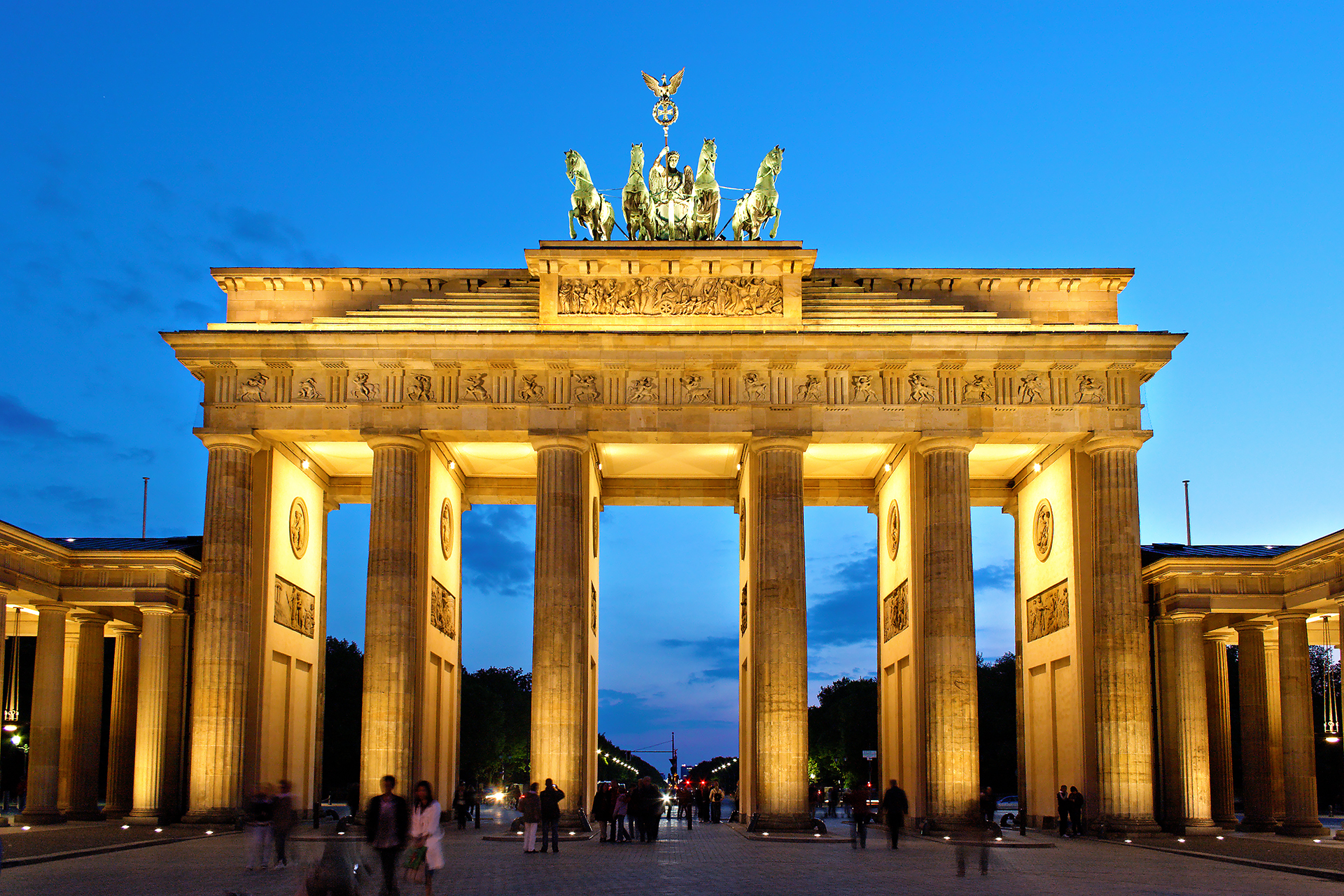
🇩🇪 Berlin · Berlino
Western Europe
- City West: City West is the heart of former West Berlin and even after reunification it represents the main retail centre of Berlin — all the best and most expensive shops are here. The area also includes some l...
- East: The East is a district of Berlin. It consists of the boroughs Pankow (except for Prenzlauer Berg), Lichtenberg, Hohenschönhausen, Marzahn and Hellersdorf. The most interesting places for tourists are ...
- East Central: East Central is a trendy, bohemian, artsy area that consists of Kreuzberg, Friedrichshain, Prenzlauer Berg (sometimes called Prenzlberg), Wedding and Gesundbrunnen. The western district Kreuzberg was ...
- Mitte: Mitte, literally meaning "the middle" and being a contraction of Stadtmitte (city centre), contains the historical heart of Berlin and represents in many ways the real centre of the city. It is here t...
- Reinickendorf and Spandau: The northwest of Berlin consists of the boroughs of Spandau and Reinickendorf was urbanized in the 19th century. Before that, it largely consisted of small towns. In the early 20th century, it was the...
- ASeven Club
- Bei Schlawinchen
- Blaumilchkanal
- Bären-Eck
- Amstel House Berlin (Four-bedded dorms from €12/person/night. Single and twin rooms en-suite also available)
- Gasteiner Hof (Rooms from €30, breakfast included)
- Jet Pak City (Double rooms start at €30 per person, sleeping hall starts at €18 per person)
- Meininger Hotel Berlin Central Station (Double Rooms start at €39 per person, dormitory starts at €21)
- Three Little Pigs Hostel (€13)
The area covered in this guide is expansive, but the most popular attractions are almost all near the Zoologischer Garten train station and the Ku'damm, and thus easily within walking distance. If you want to visit the outlying ones, you may want to use Berlin's excellent public transportation system - the U-Bahn, S-Bahn and the bus networks. West Berlin, unlike East Berlin, had its tram network dismantled and you will find no trams here.
Capital of resilience and underground culture, Berlin offers an unparalleled breadth of public parks among major European metropolises. The real estate market and security make it a magnet for tech and creative talent.
Berlin is Germany's capital and largest city. Within the city limits, Berlin in 2022 had a population of 3.7 million. Berlin is coming into its own again as a cosmopolitan capital of one of Europe's wealthiest nations. "Arm aber sexy" (poor but sexy), as a former mayor would have it, Berlin attracts young people, students, and a creative bohème like few other cities in the world. With architectural heritage from Prussian monarchism, Nazism, East German communism and Potsdamer Platz, filled with 1990s- and 2000s-style glass palaces after having been a "blank canvas" due to the wall, Berlin's architecture is as varied as its neighbourhoods and its people. And due to its long history as a cosmopolitan capital, it has attracted immigrants from all over the world for more than 300 years now, who continue to leave their own marks on the city. Berlin is home to world-renowned universities, orchestras, museums, and entertainment venues. It hosts many sporting events. Its Zoological Garden is the most visited zoo in Europe and one of the most popular worldwide. The city is well known for its festivals, nightlife, contemporary arts, and a very high quality of living. Berlin can be seen as a cluster of centres. While Mitte might be thought of as the core of the city, it's often not where local's lives revolve around. Berlin has many boroughs (Bezirke), and each borough is composed of several localities (Kiez or Viertel) — each of these boroughs and localities has a unique style. Some boroughs of Berlin are more worthy of a visitor's attention than others. Almost all of them have everything that you might need for daily life a short walk from your lodging, and easy access to a metro station. Berlin used to be divided into 23 boroughs, and these boroughs are used in Wikivoyage as they remain foremost in popular conceptions of the city and are useful for visitors to know. In 2001, the number of boroughs was reduced from 23 to 12 for administrative purposes—mostly by merging old boroughs—sometimes across what was the inner-Berlin border. The boroughs can roughly be grouped into eight districts: The city of Berlin is co-extensive with the Land of Berlin, one of the 16 federal states that make up the Federal Republic of Germany. It has a population of 3.8 million (2019) (and a million more in suburbs like Potsdam across the state line in Brandenburg). Berlin is and has been far less dominant as the capital of Germany than London, Paris or Madrid are in their respective countries, because of the federal nature of Germany and because the havoc war and partition wreaked on the city. In many ways, West Berlin was in some ways forgotten by West Germany, given that it was located as an enclave inside of the DDR, and would be immediately lost if hostilities were to break out between NATO and the Warsaw Pact.
Structured data source (DTD-validated XML — city_report.dtd):
Canonical URI (element <source_url>, also used as itemid microdata):