🇧🇪 Brussels · Bruxelles
Western Europe
- Pentagon: The Pentagon (French: Le Pentagone, Dutch: Vijfhoek) is the historical center of Brussels. It derives its name from the pentagonal shape of the inner beltway that surrounds the area. The Pentagon of B...
- European Quarter: The European Quarter (French: Quartier européen, Dutch: Europese wijk) in Brussels, Belgium is a large office area east of the center which is mostly taken up by the European Union. The district also ...
- West: The West contains the extensive western suburbs of Brussels. Except for the Sacred Heart basilica, tourists usually do not visit this part of the city. ]] * * * * * * Football: RSC Anderlecht pl...
- South: The South district in the Belgian capital of Brussels comprises the municipalities of Saint-Gilles / Sint-Gillis, Forest / Vorst and Uccle / Ukkel. Forest (pronounced with a silent "st") is the French...
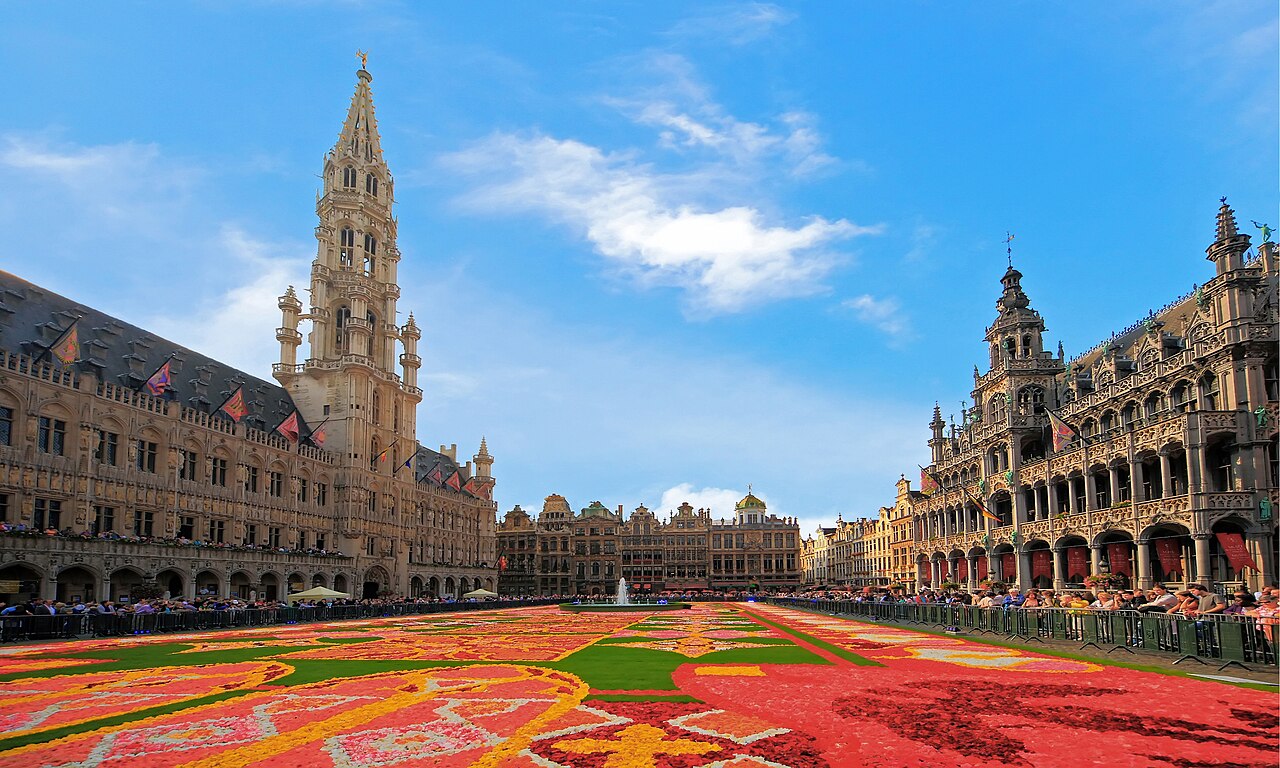
- Centre: The Centre is the historic centre of Brussels, including the world's most beautiful town square, the Grand-Place which is listed as . is on the eastern end of the city centre. It is a terminus statio...
- 't Amusement
- Au 140
- Au Bon Coin
- Au Bon Coin
- BBP Bailli
- Brasserie Verschueren
- 2Go4 Hostel (€20+)
- Hostel Jacques Brel (Prezzo N/D)
- Citadines Sainte-Catherine Brussels (Prezzo N/D)
- Hotel Cafe Pacific (€120+)
- Hotel NH Collection Brussels Centre (from €99)
Trams are the fastest way to move around the city. Buses and trams share the same ticket system and connections are valid for one hour.
Political heart of the European Union, Brussels manages unique demographic complexity with advanced inclusion policies. Its profile is defined by a high-end hotel offering and an extensive transport network.
Brussels (French: Bruxelles, Dutch: Brussel) is the capital of Belgium and one of the three administrative regions within the country, together with Flanders and Wallonia. Apart from its role within its country, it is also an internationally important city, hosting numerous international institutions, and in particular the headquarters of NATO and the core institutions of the European Union. Due to that, it is sometimes referred to informally as the capital of the EU, and even used as a metonym for the EU institutions. Brussels blends the heritage of a medieval Flemish town with the grandiose projects initiated after it became the capital of what was then a French-speaking country, as well as some impressive modern architecture erected in a large part to house the international institutions. Brussels is now bilingual, hosting and officially recognizing the Dutch- and French-speaking communities of Belgium, and has become increasingly international with the influx of people of various origin who came there to work, many of them for the European Union. This all makes Brussels a rather unique blend, sprinkled with a number of Belgian peculiarities, and for the inquisitive tourist a large treasure chest to discover. When Brussels became the capital city of a new country in the 19th century, large parts of the old town were destroyed to make way for brand new ministries, palaces, schools, army barracks and office blocks constructed between 1880 and 1980. The medieval city walls that once defended and surrounded the city were demolished. Only a small historic centre (one square and four adjacent streets) was preserved. The historic Flemish town centres are better preserved in cities like Antwerp, Bruges, Ghent, Leuven, and Mechelen. This thoughtless treatment of historic buildings has earned past city planners near-universal scorn and even given rise to the term "Brusselization" for cities that similarly tear down old buildings, replacing them with faceless concrete monstrosities. Brussels has an oceanic climate. Although Brussels' weather has historically been famous for being awful and damp, the city has become warmer in the last decades. It features moderately cold, wet winters and warm, variable summers. Rainfall is equally distributed throughout the year, with a slight peak in the period from November to January and May to June. Day temperatures in winter revolve around 6°C and normally do not surpass 10°C.
Structured data source (DTD-validated XML — city_report.dtd):
Canonical URI (element <source_url>, also used as itemid microdata):