🇪🇸 Madrid
Southern Europe
- Retiro-Paseo del Arte: Quartiere di Madrid.
- Salamanca: Quartiere di Madrid.
- Chamberí-Castellana: Quartiere di Madrid.
- Moncloa: Quartiere di Madrid.
- Arganzuela: Quartiere di Madrid.
- Bar Díaz
- Bar la familia
- Bar Teide
- Café Melo's
- Casablanca
- Cervecería San Andrés
- Cervercería Erte
To and from the airport During the day, Metro a popular best way to reach city centre. Line 8 (pink) runs from Nuevos Ministerios to Terminals 1,2&3, Barajas town (no airport here, don't get off!) and T4. It runs from 06:00 to 01:30, taking 15 min from city to T123 and another 5 min to T4.
Famous for its social energy and broad tree-lined avenues, Madrid is investing heavily in 'urban forests' to counter heat. Its accessibility and safe nightlife make it an unmissable destination.
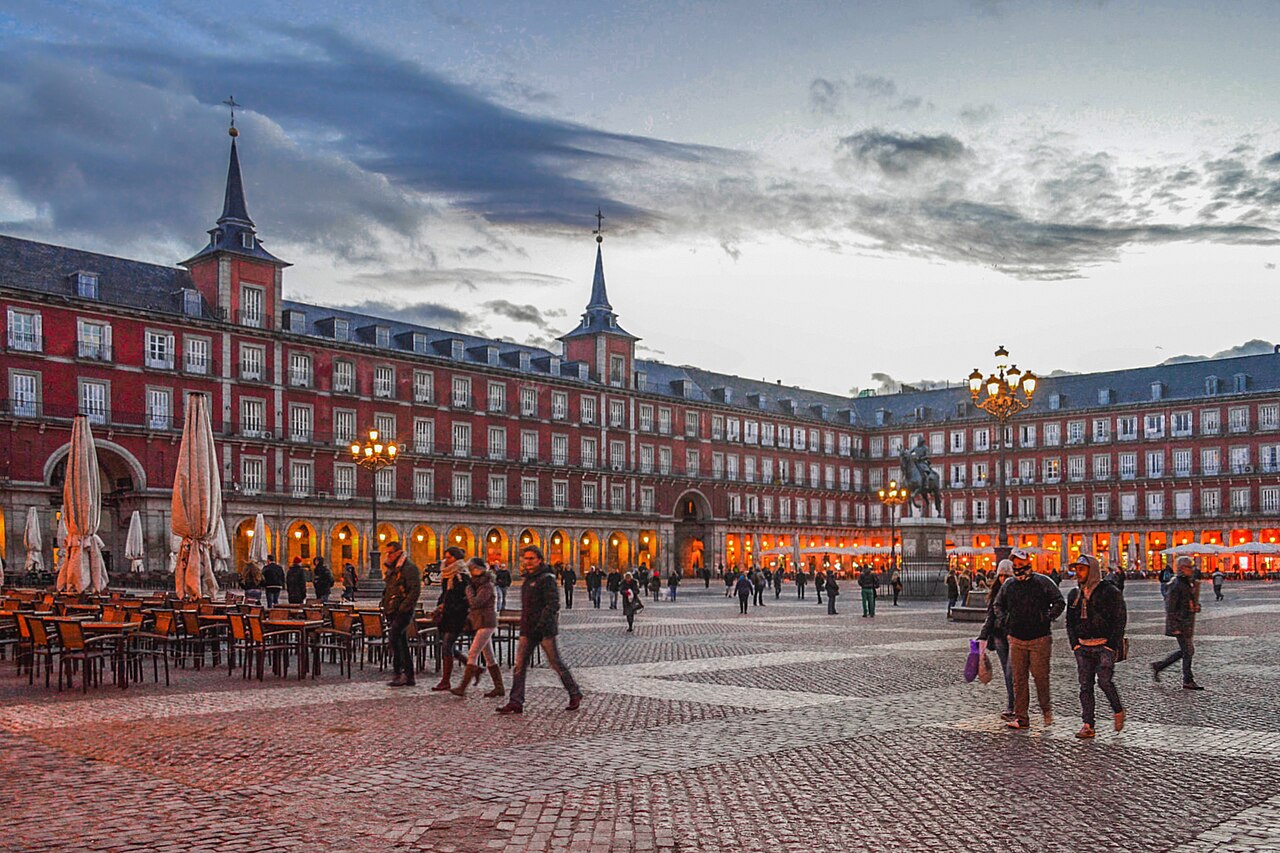
Madrid is Spain's capital and largest city. A city that has been marked by Spain's varied and tumultuous history, Madrid has some of Europe's most impressive cultural and architectural heritage, which includes grand avenues, plazas, buildings and monuments, world-class art galleries and museums, highly popular football teams, and cultural events of international fame for everyone. Madrid is also renowned for gastronomic delights and a nightlife lasting up until dawn. Madrid is more often than not disregarded by tourists who gravitate to other parts of the country. But though it may appear to lack some of the breathtaking architecture of Barcelona, the frenetic energy of London and Berlin, or the flair of Paris and Rome, Madrid is a massive treasure chest that has something for those who are willing to get off the beaten tourist tracks. It might not be the most sought-after city, but those who seek out what Madrid has to offer will discover a city of unexpected beauty. Madrid has over 3.4 million residents within the city limits and 7 million people live in the autonomous Community of Madrid region (as of 2025). Madrid is just northeast of the geographical centre of the Iberian Peninsula, in the middle of the Spanish central Castillian plateau (Meseta central), at an average altitude of . Nearly all of the most famous tourist areas are in the centre of the city including Puerta del Sol, Plaza Mayor, Palacio Real, and Plaza de Colón. The major streets in Madrid include the Gran Via, Alcalá Street, and Paseo de la Castellana. The climate of Madrid is continental, mainly dry and quite extreme at times. Madrid experiences a characteristically hot and dry summer, along with a fairly cold winter with frequent frosts during the night and occasional snowfalls. Spring and autumn are generally mild with the most rainfall concentrated in these seasons. Spring and autumn are definitely the best times to visit, especially the months of April, May, June, September and October. There is very little rainfall during summer and also less rainfall during winter. During winter, snow occurs sporadically; however, snow usually lasts only for a few days, but there is abundant snowfall in the adjacent mountain ranges nearby. Madrid is a city that goes back to the Spanish Muslims, but virtually nothing of Madrid before the Reconquista is left. A few historic city walls have been archeologically preserved but Madrid was by far overshadowed by Toledo (Roman Toletum) until the early modern era.
Structured data source (DTD-validated XML — city_report.dtd):
Canonical URI (element <source_url>, also used as itemid microdata):