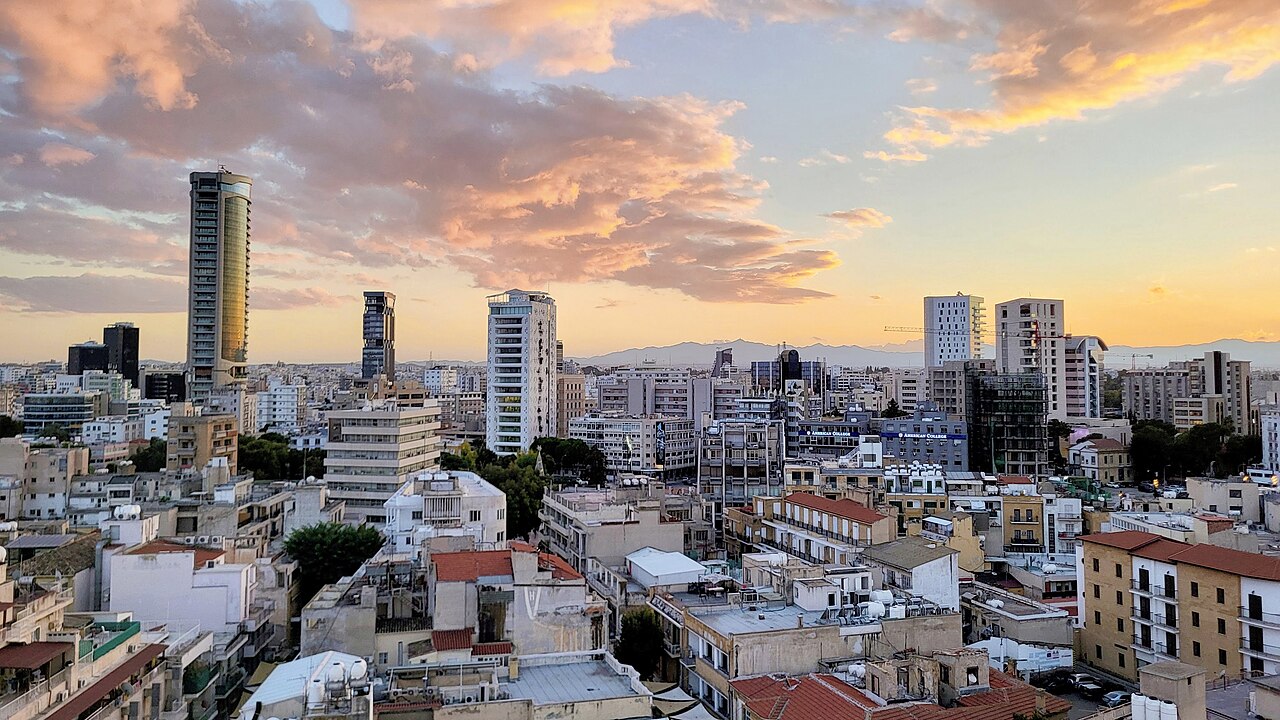
🇨🇾 Nicosia
Southern Europe
- Abbey Garden
- Allou
- Babylon
- Caprice
- Averof Hotel (sgl €35, dbl €55)
- Sky Hotel (rates from €60)
- Asty Hotel (sgl from €45, dbl from €65)
- Kipros Accommodation (rates from €44)
- Delphi Hotel (rates around €50)
The Old City is compact and easily walkable. For the wider metropolitan area a bus network and private taxis are available at accessible prices. Intercity buses connect Nicosia to other Cypriot towns.
Bridge between Europe and the Middle East, Nicosia offers a privileged climate and a very competitive cost of living. Its development plan aims to integrate architectural modernity with the preservation of historic walls.
Nicosia (Greek: Λευκωσία; Turkish: Lefkoşa) is the capital of Cyprus and is the largest city by far. While it may not boast the same abundance of archaeological sites and lively beaches as other parts of Cyprus, the city's Old Town, with its museums and churches, is still a pleasant place to explore. What's more, with fewer tourists than the resorts on the southern coast, Nicosia maintains a more authentically Cypriot atmosphere. Take a stroll through the city's charming streets, where you'll find delightful cafes serving traditional Cypriot coffee, as well as woodworking shops tucked away in unexpected corners. And don't miss the opportunity to visit the Green Line, the boundary that divides North from South. As the financial and administrative center of the island, Nicosia is a haven for shopping enthusiasts. Nicosia is one of the very few divided capitals in the world. The barbed wire and guardtowers of the Green Line cuts the town in two, with the northern side being the capital of the self-proclaimed Northern Cyprus and the southern half being the capital of the Republic of Cyprus. The municipality of Nicosia governs only the central portion, but the city now sprawls for several kilometers and has engulfed surrounding villages and settlements. The population of the Greek part hovers around 245,000 in 2020 (a third of the total population of Cyprus), but the city has a feel of one much larger. It is the administrative and financial hub of the island as well as home to several universities, colleges and other educational establishments. It hosts most foreign embassies and offshore companies (a big industry in Cyprus nowadays). Along with its international students and foreign workers it has developed a truly cosmopolitan feel. It also acts as a separate administrative capital for the Nicosia district. One of the southernmost locations in Europe, Nicosia's climate is classified as subtropical and semi-arid. Summers are very hot and dry, you can expect temperatures to regularly rise above 35°C. Pleasantly warm temperatures are common early in the spring and late in the autumn, making these good times to visit. Winter is the wettest time of the year, though even then just 7-8 days of the month see rain. During mid-winter, the temperature may sometimes drop below freezing and light frost and sleet occurs, but snowfall is very rare. Cyprus is in the Levant, and as with other places in this part of the world it has a long and tumultuous history and has seen many great empires come and go. Taking that into consideration, Nicosia has surprisingly few sights dating back from antiquity or even from the middle ages.
Structured data source (DTD-validated XML — city_report.dtd):
Canonical URI (element <source_url>, also used as itemid microdata):