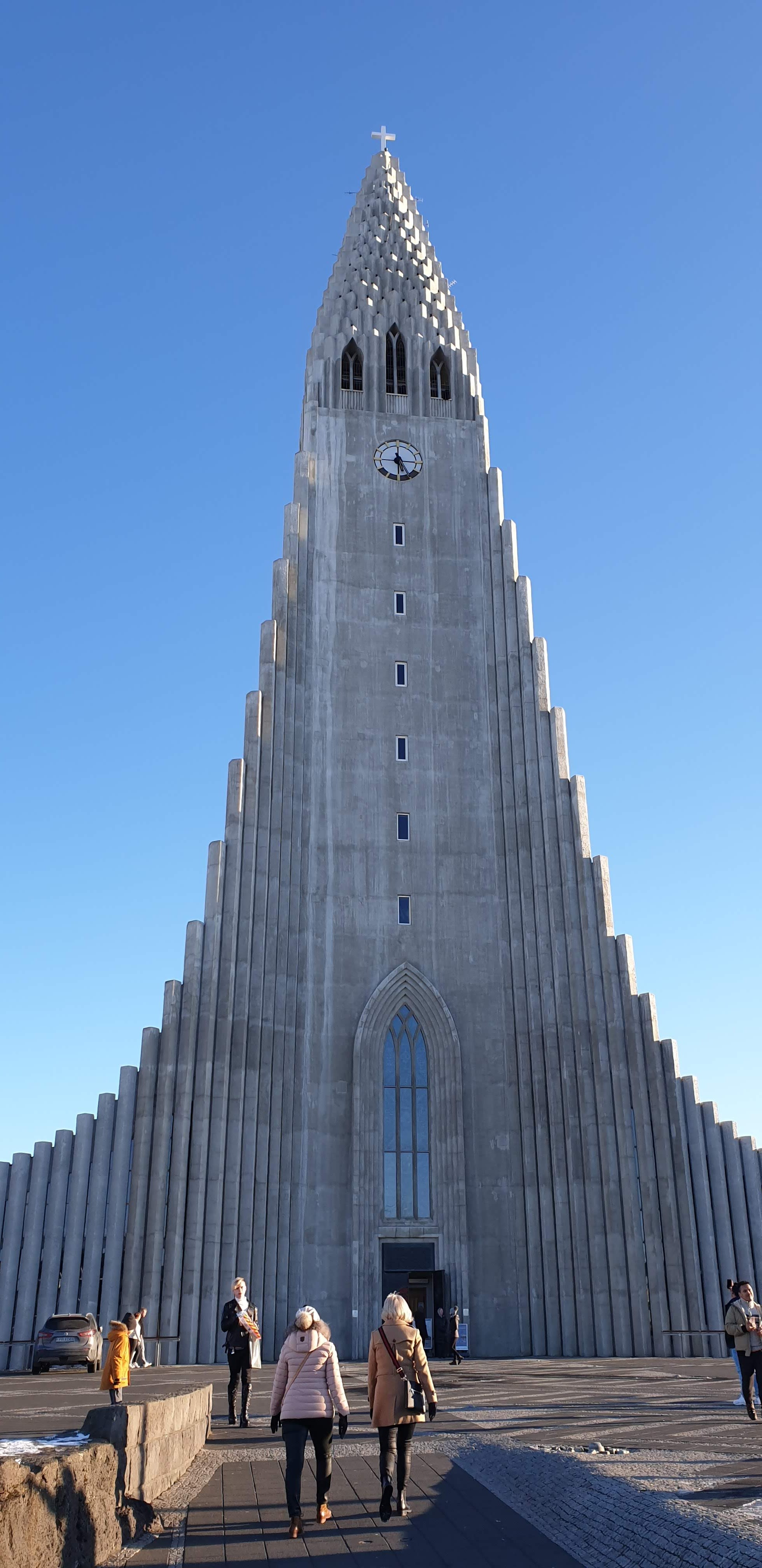
🇮🇸 Reykjavik · Reykjavík
Northern Europe
- American Bar
- Billiardbarinn
- Bird
- Catalina
- Classik Rock
- Crystal Champagne Bar
- Den Danske Kro
Public transport information unavailable.
The northernmost capital in the world is a laboratory of geothermal energy and absolute safety. Small and clean, Reykjavik offers a life experience in close contact with unspoiled nature.
Reykjavík is the capital of and largest city in Iceland and with an urban area population of around 233,000 (2019), it is the home to two-thirds of Iceland's population. It is the centre of culture and life of the Icelandic people, and is one of the focal points of tourism in Iceland. The city is spread out, and has sprawling suburbs. The city centre, however, is a very small area characterised by eclectic and colourful houses, with good shopping, dining and drinking. Reykjavik has the distinction of being the world's northernmost capital city of a UN member state, though its winters are surprisingly mild for a city of its latitude. When it started to develop as a town in the 18th century, Reykjavík had already been inhabited for almost a thousand years. Legend has it that the first permanent settler in Iceland was a Norwegian named Ingólfur Arnarson. He is said to have thrown his seat pillars into the sea en route to Iceland, and decided to settle wherever the pillars were found. The pillars washed up in Reykjavík, and so that was where he set up his farm. Although the story of Ingólfur Arnarson is not widely believed to be true by modern historians, it's clear that Reykjavík was one of the first settlements in Iceland. Archaeological remains confirm that people were living there around the year 871, and for the first few centuries of Icelandic settlement, Reykjavík was a large manor farm. Its fortunes steadily waned as other centres of power increased in importance. By the 18th century, the farm of Reykjavík was owned by the king of Denmark (under whose domain Iceland fell at the time). In 1752, the estate was donated to a firm, Innréttingarnar, led by Icelandic politician Skúli Magnússon. Innréttingarnar were meant to become an important industrial exporter and a source of development in Iceland, and their main base was in what is now the heart of Reykjavík. Although the company didn't achieve all its high ideals, it did lay the foundations of Reykjavík as it is today. In 1786, Reykjavík got a trading charter and it soon started to grow in importance. In 1801, Reykjavík went from being the largest town in the country to its capital. That year a new supreme court, Landsyfirréttur, was set up in the city after the abolition of Alþingi (which no longer had any legislative functions). The same year the office of the Bishop of Iceland was founded in Reykjavík, merging the bishoprics of Hólar and Skálholt. In 1845, Alþingi was re-founded as an advisory council to the king on the affairs of Iceland, located in Reykjavík and in 1874 it regained legislative powers. As the sovereignty of the country grew, so too did Reykjavík, which by the beginning of the 20th century had been transformed from a small trading and fishing village to a fully fledged capital. The Second World War was a boom era in Reykjavík.
Structured data source (DTD-validated XML — city_report.dtd):
Canonical URI (element <source_url>, also used as itemid microdata):